If your roof is leaking after a sudden Birmingham thunderstorm or you’ve spotted missing shingles from high winds, the fastest way to stop water damage is to learn how to tarp a roof properly. The best way to tarp different roof types depends on whether you have asphalt shingles, metal, flat, tile, or slate, but the goal is always the same: create a temporary waterproof seal until professional repair arrives. At Reliable Service Roofing, we’ve tarped thousands of Birmingham roofs after storms, and we recommend calling a local expert for anything steeper than a single-story ranch or if you’re unsure about safety.
Birmingham’s frequent spring and summer storms make emergency roof tarp one of the most important temporary roof repair skills every homeowner should know. Whether you need a roof tarp installation after hail damage or a quick tarp roof leak fix, doing it right can prevent thousands in interior water damage. This complete guide walks you through exactly how to tarp different roof types, the best materials, safety steps, and when to call the professionals at Reliable Service Roofing.
What Is Roof Tarping and Why Birmingham Homes Need It Now
Roof tarping is a temporary roof covering that uses heavy-duty waterproof tarps to protect storm roof damage until permanent repairs can be made. In Birmingham’s humid, storm-prone climate, wind damage roof issues and leaking roof emergency situations happen fast. A properly installed emergency roof tarp can stay on for days or even weeks while you schedule roof storm damage repair near me.
When should you tarp a damaged roof? The moment you see missing shingles, cracked tiles, or water coming through the ceiling. Waiting even one rainstorm can turn a small problem into mold, ruined insulation, or structural issues.
Safety Warnings Before You Climb: Roof Tarping Safety Tips
Never tarp a roof if it’s wet, windy, or dark—Birmingham storms often leave roofs slippery. Common client mistakes we see include homeowners using cheap plastic tarps that tear in the next gust or climbing without proper gear.
Roof safety tips every Birmingham homeowner must follow:
- Use a sturdy extension ladder secured at the base.
- Wear non-slip shoes, a safety harness, and gloves.
- Have a spotter on the ground.
- Never tarp alone on a steep roof.
If your roof pitch is steeper than 6/12 or you’re over one story tall, skip the DIY and call local roofing contractor for tarping immediately.
Tools & Materials You’ll Need for Professional-Grade Roof Tarping
- Heavy-duty 10–12 mil waterproof tarp (poly or canvas – never thin plastic)
- 2×4 lumber or sandbags for weighting edges
- Roofing nails, screws, or tarp straps with grommets
- Roof tape or sealant for edges
- Ladder stabilizer and fall-arrest harness
- Utility knife and measuring tape
What type of tarp is best for roofing? We recommend reinforced polyethylene tarps rated for 100+ mph winds—the same ones used by roof tarp service professionals in Birmingham.
Step-by-Step: How to Tarp a Roof Properly
How do you tarp a roof properly? Follow these 8 steps for any roof type:
- Assess damage from the ground first.
- Clear loose debris safely.
- Measure and cut tarp 4–6 feet larger than damaged area on all sides.
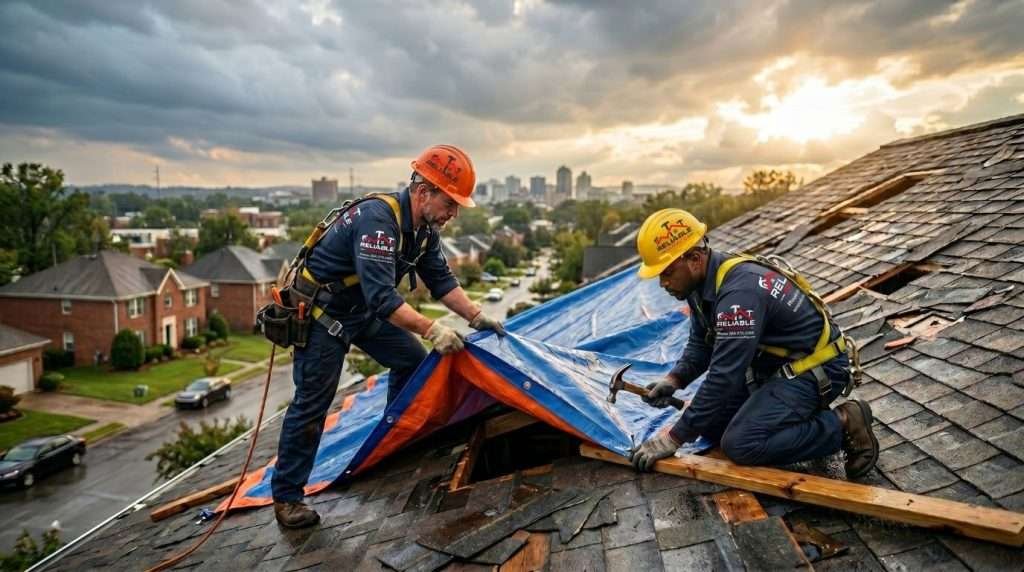
- Position tarp from the lowest point and work upward.
- Secure bottom edge first with 2×4 boards or sandbags.
- Fasten sides and top with screws every 12–18 inches.
- Seal all edges with roof tape.
- Check tension and add extra weight if wind is forecast.

How to Tarp a Shingle Roof After Storm Damage
How to tarp a shingle roof is the most common request we get in neighborhoods like Homewood and Vestavia Hills.
Step-by-step for asphalt shingle roofs:
- Start at the bottom edge of the damaged section.
- Roll tarp over missing shingles roof area.
- Secure bottom with a 2×4 board nailed into the fascia (never directly into shingles).
- Work upward, overlapping by at least 12 inches.
- Use screws with rubber washers every 12 inches along the sides.
Temporary repair for shingle roof damage like this buys you 7–14 days of protection. How to secure a tarp on a steep roof is critical here—always add extra boards on steep pitches common in older Birmingham homes.
How to Tarp a Metal Roof Safely
Metal roofs are slippery and expand/contract with Alabama heat, so how to tarp a metal roof requires extra care.
Emergency metal roof leak fix steps:
- Use only screw-down methods—never nails that can puncture.
- Place tarp over the leaking panel and extend 3 feet past seams.
- Secure with self-tapping screws and neoprene washers.
- Add sandbags or anti-slip mats on the tarp surface.
Temporary metal roof protection done correctly prevents wind damage roof issues from worsening.
How to Tarp a Flat Roof to Stop Leaks
Flat roofs (common on commercial buildings and some modern Birmingham homes) pool water, making how to tarp a flat roof different from sloped roofs.
Flat roof leak tarp solution:
- Pump or sweep away standing water first.
- Lay tarp flat and extend 4 feet beyond the leak in all directions.
- Weight all edges heavily with sandbags or 2×4 lumber (no nails into flat roof membrane).
- Create a slight slope for drainage if possible.
Emergency flat roof waterproofing with this method stops ponding leaks immediately.
How to Tarp a Tile Roof or Slate Roof
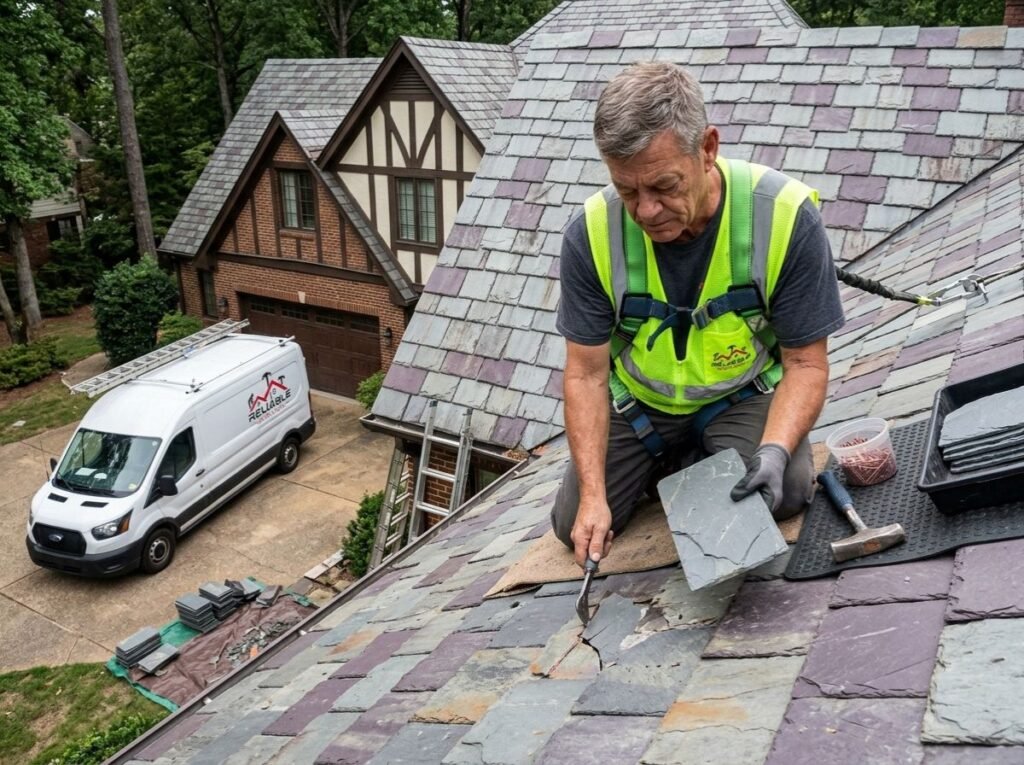
- Never walk directly on tiles or slate—use roof jacks or boards.
- Place tarp over broken roof tiles and extend well beyond.
- Secure only at the edges with sandbags or straps around rafters.
- Temporary tile roof repair or emergency slate roof protection prevents further cracking during the next storm.
How Long Can a Roof Tarp Stay On?
Maximum 30–45 days in Birmingham’s climate. After that, UV rays and wind can degrade even the best tarp. Schedule permanent roof damage protection repairs before then.
How Much Does Emergency Roof Tarping Cost in Birmingham, AL?
Emergency roof tarping near me typically costs $400–$1,200 depending on roof size and height. Full roof tarping services near me with professional installation and 24/7 response run $800–$2,500. We provide transparent pricing and often include tarping in our emergency roof repair near me packages at no extra charge when you choose Reliable Service Roofing for the permanent fix.
Roof Tarping Services Near Me: Serving the Entire Birmingham Metro
Reliable Service Roofing doesn’t just serve downtown Birmingham—we provide storm damage roof tarp service throughout the metro area from our office at 2700 Corporate Drive Suite 200, Birmingham, AL 35242.
We proudly serve:
- Hoover, Vestavia Hills, and Mountain Brook
- Homewood, Trussville, Pelham, and Alabaster
- Helena, Chelsea, Bessemer, and Gardendale
- Center Point, Pinson, Leeds, and beyond
Whether you search for emergency roof tarping near me in Shelby County or Jefferson County, our local teams arrive fast with the right tarps for your roof type.

When to Call a Professional in Birmingham, AL
Can I tarp my roof myself? Only if it’s a small, low-slope area and you’re comfortable on a ladder. Call a local roofing contractor for tarping immediately if:
- Roof is two stories or higher
- You see widespread storm damage
- You’re not 100% confident in your abilities
- It’s still raining or high winds are forecast
When should you tarp a damaged roof versus calling pros? If water is already entering your home, call us first—we’ll tarp it same-day as part of our temporary roof protection service.
Why Choose Reliable Service Roofing for Roof Tarping in Birmingham, AL
When you need fast, reliable roof tarp service in Birmingham, choose the team that’s protected more local roofs than anyone else:
- 15+ years serving Birmingham and surrounding areas
- 24/7 emergency roof leak repair near me response
- Professional-grade tarps and proper installation every time
- Seamless transition from temporary roof tarp to full roof repair in Birmingham AL
- Insurance claim help and transparent pricing
- Family-owned and operated right here in Birmingham
We’re not just another roof tarping services near me—we’re your neighbors who understand exactly how Alabama storms affect every roof type.
Prevention Tips & Roof Maintenance Recommendations
Roof leak prevention starts with regular inspections. Trim overhanging branches, clean gutters twice a year, and consider impact-resistant shingles for future storm preparation roofing. After every major storm, walk your property and look for early signs of wind damage roof or missing shingles repair needs.
FAQs
Start from the bottom, overlap sections by 12 inches, and secure edges with boards and screws for a watertight temporary seal.
Each roof type needs a slightly different method—shingle roofs use nails into fascia, metal uses screws with washers, and flat roofs rely on heavy weighting instead of fasteners.
Use a heavy-duty 10–12 mil waterproof tarp, extend it well beyond the damage, and secure it tightly to prevent wind lift.
A professionally installed roof tarp can safely stay on for up to 30–45 days in Birmingham’s climate before permanent repairs are needed.
Only on low, simple roofs and if you follow strict safety steps—otherwise, call a professional to avoid injury or further damage.
Roll the tarp from the bottom up over missing shingles, secure the bottom edge with a 2×4 board, and fasten sides every 12 inches.
Use extra lumber boards, sandbags, and more frequent fasteners while wearing a safety harness—steep Birmingham roofs require extra caution.