In today’s world of rising energy prices and increasing focus on sustainability, Birmingham property owners are looking for every possible way to lower utility bills. One of the most effective — yet often overlooked — solutions is upgrading to a TPO roof.
TPO (Thermoplastic Olefin) roofing has gained massive popularity in Alabama because of its bright white reflective surface and excellent thermal performance. But the real question is: Can TPO roofing actually help reduce energy costs?
The answer is a resounding yes — when properly installed and maintained, a high-quality TPO roof can significantly lower cooling costs in Birmingham’s hot, humid summers and improve overall energy efficiency year-round. In this ultimate guide, Reliable Services Roofing breaks down exactly how TPO roofing works, the science behind its energy-saving benefits, real numbers for Birmingham buildings, and what you should consider before making the switch.
What Is TPO Roofing and Why Is It So Popular in Birmingham?
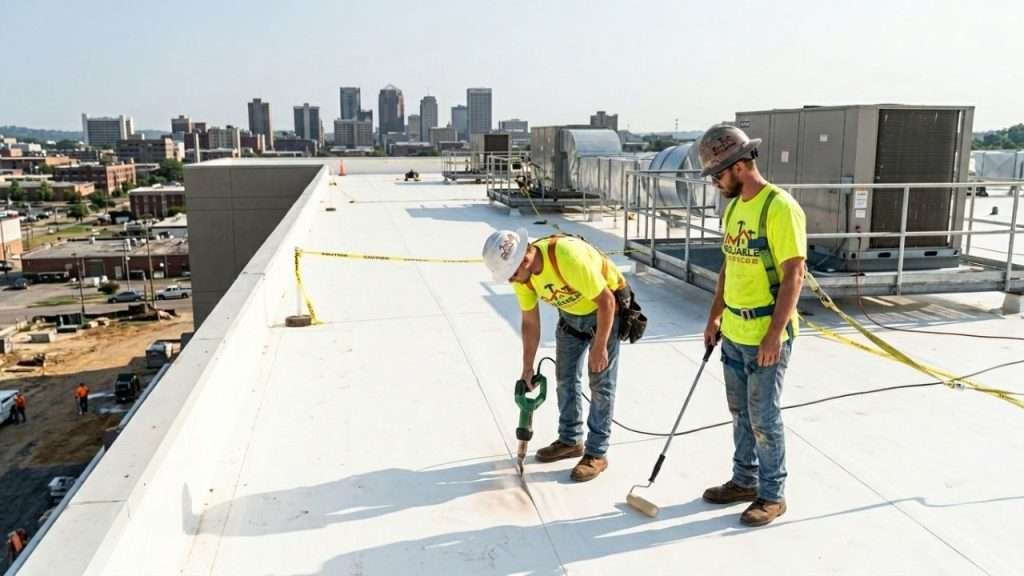
TPO is a single-ply synthetic membrane roof system made from a blend of polypropylene and ethylene-propylene rubber. It is heat-welded at the seams to create a strong, monolithic waterproof layer. What makes TPO stand out is its highly reflective white surface, which is specifically designed to reflect sunlight instead of absorbing it.
In Birmingham and across Alabama, TPO has become a top choice for commercial buildings, warehouses, offices, schools, and modern residential properties because it offers an excellent balance of performance, durability, and cost-effectiveness.
The Science: How TPO Roofing Reduces Energy Costs

The primary way TPO roofing lowers energy bills is through solar reflectance and thermal emittance — two critical properties measured by the Cool Roof Rating Council (CRRC).
1. High Solar Reflectance A new TPO roof can reflect up to 85–90% of the sun’s rays. Traditional dark roofs (asphalt, modified bitumen, or older TPO that has aged) absorb 80–95% of solar energy, turning your building into a heat sink. This dramatically increases the load on your air conditioning system during Birmingham’s long, hot summers.
2. Excellent Thermal Emittance TPO efficiently releases any absorbed heat back into the atmosphere instead of transferring it into your building.
3. Reduced Heat Island Effect By staying cooler, TPO roofs help lower the overall temperature around your property, creating a more comfortable microclimate.
Real Energy Savings in Birmingham
Studies and local case examples from the Birmingham metro area consistently show that switching to a high-quality TPO roof delivers measurable and often substantial energy savings. Because of our long, hot, and humid summers, the reflective properties of TPO make a particularly strong impact on cooling costs.
Documented Savings Include:
- Commercial buildings with TPO roofs in Birmingham typically see 15–35% reduction in cooling costs during the peak summer months (June through September). This is largely due to the membrane’s ability to reflect up to 85–90% of solar radiation instead of absorbing it like darker roofing systems.
- Warehouses and large retail spaces often report annual energy savings of $0.08 – $0.25 per square foot. For a 100,000 sq ft warehouse, this translates to $8,000 – $25,000 per year in reduced electricity bills.
- A prominent 50,000 sq ft office building in Hoover replaced its old dark modified bitumen roof with a new white TPO system. The owners reported a reduction of over $18,000 in annual cooling costs during the first full year after installation. The building’s HVAC system also experienced less strain, potentially extending the life of expensive mechanical equipment.
- A medical office complex in Vestavia Hills saw a 28% drop in summer cooling expenses after upgrading to an 80-mil TPO roof with enhanced insulation.
- Multiple retail strip centers in Trussville and Homewood have documented 20–30% average reductions in monthly energy bills during the cooling season.
These real-world results become even more significant when TPO installation is combined with improved insulation, proper ventilation, and cool roof coatings. Many Birmingham property owners find that the energy savings alone can pay back a substantial portion of the roof investment within 5–8 years, making TPO one of the smartest long-term decisions for commercial and large residential properties.
Additional Benefits Beyond Energy Savings
While the reduction in energy costs is often the primary motivation for choosing TPO, the material delivers numerous other important advantages that add significant value:
- Longer Roof Lifespan: A professionally installed TPO roof typically lasts 20–30+ years with proper maintenance — often outliving traditional dark roofing systems in Alabama’s climate.
- Strong Resistance to Punctures and Wind Uplift: TPO membranes are highly flexible yet extremely tough, providing excellent resistance to hail, wind-driven debris, and foot traffic.
- Excellent Fire Resistance Ratings: TPO systems generally achieve high fire-resistance classifications, which can lead to lower insurance premiums for commercial properties.
- Lower Maintenance Costs: Compared to darker roofing systems that absorb more heat and degrade faster, TPO requires less frequent repairs and maintenance over its lifetime.
- Increased Property Value and Market Appeal: A clean, bright white TPO roof significantly improves curb appeal and is viewed favorably by buyers and tenants who prioritize energy efficiency and modern aesthetics.
- Environmental Benefits: By reducing energy consumption, TPO roofs help lower your building’s carbon footprint. Many TPO membranes are also recyclable at the end of their service life.
- Improved Indoor Comfort: Reduced heat transfer means more consistent indoor temperatures and less strain on HVAC systems, creating a more comfortable environment for occupants.
These combined benefits make TPO roofing an exceptionally smart investment for forward-thinking Birmingham property owners who want both immediate energy savings and long-term performance.
Comparing TPO with Other Roofing Systems for Energy Efficiency
| Roofing System | Solar Reflectance | Energy Savings Potential | Lifespan | Best For |
|---|---|---|---|---|
| TPO (White) | 85–90% | High | 20–30 years | Commercial & Modern Homes |
| EPDM (Black) | 6–10% | Low | 20–30 years | Budget projects |
| Modified Bitumen | 10–25% | Medium-Low | 15–25 years | Traditional flat roofs |
| Metal Roofing | Varies | Medium-High | 40+ years | Residential & Industrial |
| Built-Up Roofing (BUR) | Low | Low | 15–25 years | Older commercial buildings |
TPO consistently ranks among the top performers for energy efficiency in hot climates like Birmingham.
Key Factors That Maximize Energy Savings with TPO
To get the maximum benefit from a TPO roof in Birmingham, consider these important factors:
- Proper Insulation Thickness — Adding or upgrading insulation during installation dramatically boosts energy performance.
- High-Quality TPO Membrane — 60 mil or 80 mil thickness with excellent reflectivity ratings.
- Professional Installation — Heat-welded seams and correct flashing details prevent leaks that could undermine energy efficiency.
- Regular Maintenance — Annual inspections and occasional cleaning help maintain high reflectivity.
Common Myths About TPO and Energy Savings
Myth 1: “All white roofs save the same amount of energy.” → Not true. Quality, thickness, and proper installation make a big difference.
Myth 2: “TPO roofs are only good for commercial buildings.” → Modern TPO systems work excellently on residential low-slope and flat roofs too.
Myth 3: “Energy savings are too small to matter.” → For larger buildings, savings can reach tens of thousands of dollars annually.
How Reliable Services Roofing Helps You Maximize Savings
At Reliable Services Roofing, we don’t just install TPO roofs — we design energy-efficient roofing systems tailored to Birmingham’s climate. Our process includes:
- Detailed energy modeling
- Optimal insulation recommendations
- Premium TPO membrane selection
- Proper ventilation and drainage design
- Comprehensive warranties
Learn more about our expert TPO Roofing Services in Birmingham, AL
Final Thoughts: TPO Roofing Is a Smart Energy Investment

Yes — a properly installed TPO roof can significantly reduce your energy costs, especially in Birmingham’s hot summers. The combination of high reflectivity, strong durability, and excellent waterproofing makes TPO one of the smartest roofing choices for both commercial and residential properties in Alabama.
If your current roof is old, dark, or showing signs of wear, upgrading to a white TPO system could be one of the best long-term investments you make for your property.
Ready to lower your energy bills and protect your building?
Contact Reliable Services Roofing today at 205-370-3160 or request a free roof evaluation. Our experienced team will provide honest recommendations and help you choose the best TPO roofing solution for your specific needs.
A cooler, more energy-efficient roof is within reach — let us help you get there.
FAQs
A high-quality TPO roof typically lasts 20–30 years with proper installation and maintenance. However, in Birmingham’s hot, humid climate with frequent storms, many roofs start showing problems between 12–18 years.
If your roof is over 18–20 years old, has multiple leaks in different areas, widespread seam failure, or more than 25–30% of the membrane shows significant damage, full replacement is usually more cost-effective and reliable.
Yes. Prompt repair of isolated issues like small punctures, seam separations, or flashing damage can add 5–10 years to your roof’s lifespan when done by professionals.
Minor repairs usually range from $800 – $4,000, while a full TPO roof replacement on a typical commercial building costs $12,000 – $28,000+, depending on size and complexity.
Insurance often covers sudden damage from storms, hail, or wind, but not normal wear and tear. Documenting the damage quickly with professional photos and reports greatly improves your chances of approval.