TPO (Thermoplastic Olefin) roofing has become one of the most popular flat roofing systems for commercial buildings, warehouses, offices, and modern residential properties in Birmingham. Known for its excellent reflectivity, energy efficiency, and durability, a well-installed TPO roof can last 20–30+ years.
However, like all roofing systems, TPO roofs eventually show signs of aging, damage, or wear. The critical question every property owner faces is: How do you know if your TPO roof needs repair or full replacement?
Making the wrong decision can be expensive. Repairing when replacement is needed leads to repeated leaks and higher long-term costs. Replacing too early wastes money. In this comprehensive guide, we’ll show you the clear warning signs, inspection methods, cost comparisons, and expert recommendations tailored to Birmingham’s climate.
Understanding TPO Roofing in Birmingham
TPO is a single-ply membrane roof system widely used on flat and low-slope commercial roofs. It is heat-welded at seams and offers strong resistance to UV rays, chemicals, and punctures. However, Birmingham’s intense heat, high humidity, frequent thunderstorms, and occasional hail create specific challenges for TPO roofs.
Bolded Important Words: Early detection of problems is the key to extending your TPO roof’s lifespan and protecting your building.

12 Clear Signs Your TPO Roof Needs Attention
TPO roofs are durable, but they are not immune to wear, especially in Birmingham’s harsh climate of intense heat, high humidity, frequent thunderstorms, and occasional hail. Recognizing the warning signs early can save you thousands of dollars by allowing timely repairs instead of a full replacement. Here are 12 critical signs that indicate your TPO roof needs immediate professional attention:
1. Visible Cracks or Splits in the Membrane Small cracks often begin at heat-welded seams or around roof penetrations (pipes, vents, HVAC units). If you notice cracks wider than 1/8 inch or multiple cracks concentrated in one area, this is a serious red flag. In Birmingham’s temperature extremes, the membrane expands and contracts repeatedly, causing these cracks to widen over time and allow water intrusion.
2. Seam Separation TPO roofs rely on strong heat-welded seams for waterproofing. When these seams start pulling apart, lifting, or showing “fishmouth” openings, water can easily penetrate. Seam separation is one of the most common failure points in TPO systems older than 10–12 years and requires urgent professional repair.
3. Ponding Water If water remains standing on your roof for more than 48 hours after rainfall, this is a major problem. Ponding accelerates membrane deterioration, promotes algae growth, and puts enormous stress on seams and flashings. In Birmingham’s heavy rain seasons, poor drainage is a leading cause of premature TPO roof failure.
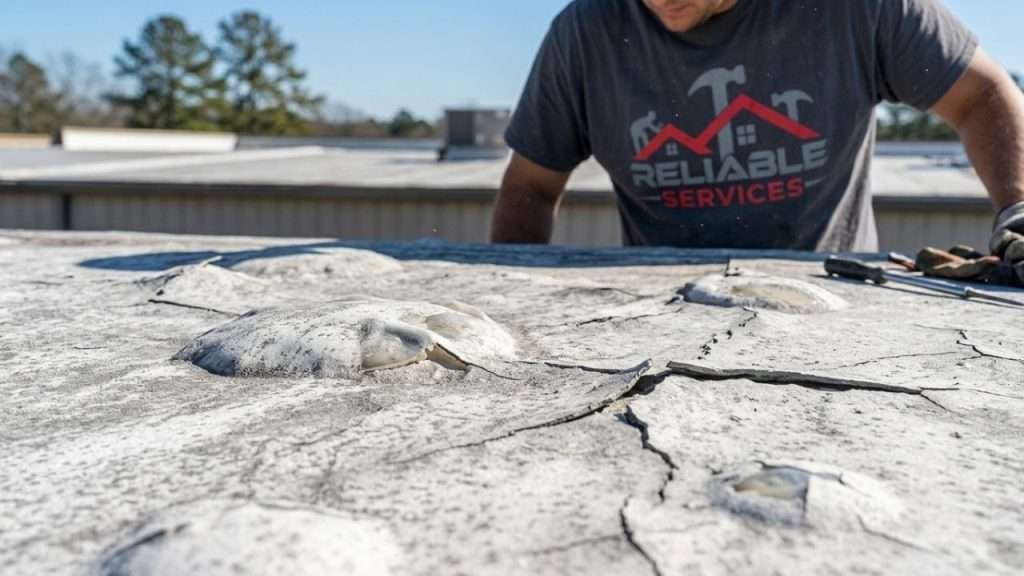
4. Blistering or Bubbling Blisters form when trapped moisture or air expands under the membrane. Small blisters may be repairable, but large or numerous blisters usually indicate serious underlying issues with the insulation or decking and often require professional evaluation.
5. Excessive Dirt, Algae, or Black Streaks While light surface dirt is normal, heavy black streaks, algae, or biological growth that doesn’t wash away easily signals that the protective coating on the TPO membrane is breaking down. This reduces reflectivity and accelerates aging.
6. Frequent or Recurring Leaks If you’ve had to patch the same area multiple times or notice new water stains on ceilings after rain, your TPO roof is likely failing. Recurring leaks are a clear sign that surface repairs are no longer sufficient.
7. Wrinkling or Ridging Wrinkles, ridges, or “tenting” in the membrane usually indicate problems with the insulation board or roof deck below. These issues allow water to pool and can lead to major structural damage if ignored.
8. Loss of Reflectivity A new TPO roof is bright white for a reason — it reflects heat and UV rays. If your roof has turned gray, yellowish, or chalky, the protective surface coating is wearing off, making the membrane more vulnerable to UV damage and heat aging.
9. Soft or Spongy Areas When walking on the roof, if you feel soft, spongy, or “bouncy” spots, this usually means the roof decking or insulation underneath is compromised by water damage. This is a high-priority issue that needs immediate professional inspection.
10. Damaged Flashings and Penetrations Cracked, corroded, or missing flashing around HVAC curbs, plumbing vents, skylights, and edges is one of the most common sources of leaks in TPO roofs. Flashings endure the most movement and weather exposure.
11. Exposed or Deteriorated Reinforcement Scrim In advanced stages of wear, you may see the white or gray fabric reinforcement (scrim) showing through the top layer. This means the membrane is thinning dangerously.
12. Age of the Roof Even without visible damage, a TPO roof older than 18–20 years should be professionally inspected. Many Birmingham commercial roofs installed in the early 2000s are now reaching the end of their reliable lifespan.
Repair vs Replacement: How to Decide
Making the right choice between repair and replacement is critical for long-term cost savings and building protection.
When Repair Is Usually Sufficient:
- Small, isolated punctures or seam issues
- Minor blistering (less than 6 inches in diameter)
- Localized flashing damage that hasn’t caused widespread leaks
- The roof is under 12–15 years old with otherwise good condition
When Full Replacement Is Strongly Recommended:
- Multiple active leaks in different areas of the roof
- Widespread seam failure across large sections
- The roof is over 18–20 years old
- Extensive ponding water combined with membrane shrinkage
- Multiple previous patch repairs have failed
- Soft spots or decking damage is present
Important Rule of Thumb: If more than 25–30% of the roof shows significant damage or you’ve had recurring leaks despite repairs, a full replacement is almost always more cost-effective and reliable in the long run.
Pro Tip for Birmingham Property Owners: Because of our humid climate and frequent storms, many local building owners find that investing in a full replacement with modern TPO materials and better insulation provides better long-term value than repeated repairs.
Cost Comparison: Repair vs Replacement in Birmingham
Minor Repairs: $800 – $3,500 Moderate Repair Package: $4,000 – $8,000 Full TPO Roof Replacement (average commercial building): $12,000 – $28,000+
While repairs cost less upfront, repeated repairs on an aging TPO roof often end up costing more than a single full replacement.
Birmingham-Specific Factors Affecting TPO Roofs
Birmingham’s climate puts extra stress on TPO roofs:
- High UV Exposure: Causes faster chalking and brittleness
- Humidity and Heat Cycling: Leads to membrane shrinkage and seam stress
- Hail and Wind: Common causes of punctures and seam failures
- Pollution and Algae: Accelerates surface degradation
How to Inspect Your TPO Roof
DIY Visual Inspection Checklist:
- Walk the roof after rain to check for ponding
- Look for discoloration, cracking, or brittleness
- Check all seams and flashings
- Inspect around HVAC units and pipes
- Look for interior water stains
Professional Inspection We strongly recommend an annual professional inspection, especially for roofs over 10 years old.
Preventive Maintenance to Extend TPO Roof Life
- Annual professional inspections
- Regular cleaning of drains and scuppers
- Prompt repair of small issues
- Application of TPO-compatible coatings every 5–7 years
When to Call a Professional Immediately
Call a roofing expert right away if you notice:
- Active leaks inside the building
- Large areas of ponding water
- Multiple separated seams
- Visible damage after a storm

Final Thoughts: Don’t Wait Until It’s Too Late
Knowing the signs that your TPO roof needs repair or replacement can save you thousands of dollars and prevent major interior damage. While minor issues can often be repaired, widespread damage usually calls for full replacement.
For Birmingham property owners, investing in regular inspections and timely action is the smartest way to protect your building.
Ready to have your TPO roof evaluated?
Contact Reliable Services Roofing today at 205-370-3160 or visit our website for a free inspection.
Learn more about our expert TPO Roofing Services in Birmingham, AL
A well-maintained TPO roof can provide decades of reliable protection. Make the right choice today for long-term peace of mind.
FAQs
A quality TPO roof lasts 20–30 years with proper maintenance. Poor installation or lack of care can reduce this significantly.
Most experts recommend starting annual professional inspections after year 12–15.
Yes. Addressing small issues early can add 5–10 years to your roof’s lifespan.
Check your original paperwork or contact the installer. Most TPO warranties are 10–20 years.
TPO is generally one of the more cost-effective single-ply options, especially for larger commercial roofs.
If you have multiple leaks, widespread seam failure, or heavy ponding, replacement is usually the better long-term investment.