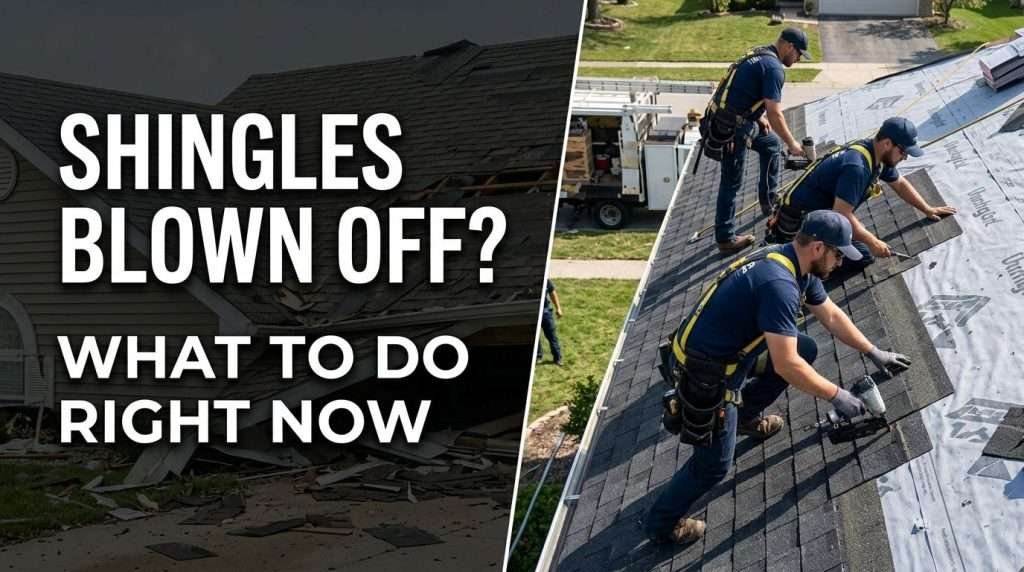
Yes, your roof can absolutely leak if shingles blew off during a severe storm. While your roof’s underlayment provides short-term protection, missing shingles expose the underlying felt and decking directly to rain, which will cause a roof leak after shingles blown off if left unaddressed. To prevent serious water damage, you must act fast by assessing the damage safely from the ground, documenting the issue for insurance, and scheduling an emergency roofing service immediately.
Understanding Shingle Loss and Roof Leak Dynamics
When strong Alabama winds tear through your neighborhood, asphalt shingles are often the first line of defense to fail. To understand why a roof leak immediate fix becomes necessary after a major wind event, it helps to understand exactly how your roofing system is engineered to repel water.
The Anatomy of an Asphalt Shingle Roof
Your roof is not just a single layer of asphalt tabs; it is an interconnected system designed to shed water sequentially.
- The Wooden Decking (Sheathing): Usually constructed from OSB or plywood sheets, this forms the structural foundation of your roof.
- The Underlayment: A layer of asphalt-saturated felt or synthetic fabric pinned directly to the wood decking. It serves as a secondary water-resistant barrier.
- The Shingles: The primary exterior shield. Shingles overlap each other to direct rainwater downward into your gutter system.
- The Sealant Strip: A factory-applied line of thermal adhesive that bonds overlapping shingles together when exposed to the sun’s heat.
Can My Roof Leak If Shingles Are Missing?
Homeowners frequently ask, can my roof leak if shingles are missing? The answer is a definitive yes, though it may not happen during the very first rain shower. When a shingle is ripped away by heavy winds, the layer directly underneath—the underlayment—is exposed to the elements.
While modern synthetic underlayments are highly water-resistant, they are pinned down with plastic cap nails or staples. Every puncture point is a potential vulnerability. Over time, UV radiation from the intense Alabama sun degrades the underlayment, and pooling water can seep through fastener holes directly into your plywood decking. Once the wood decking absorbs water, it rots, sags, and allows water to enter your attic space.
Why Wind Velocity Rips Shingles Away
Shingles do not simply fly off because they are heavy; they fail due to aerodynamic lift. As strong storm winds rush over the ridge of your roof, they create a low-pressure vacuum above the shingles while high pressure builds underneath any loose edges. If the factory sealant strip has degraded due to age, or if the shingles were high-nailed above the proper installation line during construction, the wind can easily catch the tab, break the bond, and tear it away from the fasteners.
Step-by-Step Guide: What to Do If Shingles Blow Off in a Storm
If you walk out into your yard after a severe storm and find gray or black asphalt tabs scattered across your lawn, do not panic. Follow these clear, sequential steps to secure your property and set up a successful blown off shingles solution.
Step 1: Perform a Safe Visual Inspection From the Ground
CRITICAL SAFETY WARNING: Never climb onto a wet, storm-damaged roof yourself. After a high-wind event, neighboring shingles may be loosened, structural decking could be compromised, and power lines may be down nearby. Leave the climbing to licensed professionals who possess OSHA-compliant fall-arrest safety gear.
Grab a pair of binoculars and walk around your yard. Look up at your roof lines to count the number of shingles missing roof repair zones. Note whether the damage is concentrated along the eaves, the valley lines, or near the ridge caps.
Step 2: Check Your Home’s Interior for Early Signatures of Water Intrusion
Grab a high-powered flashlight and head up into your attic space. Look closely at the underside of your roof rafters and sheathing. You are searching for:
- Dark, damp wood staining or water tracking along framing lumber.
- Wet or matted fiberglass insulation blankets.
- Active dripping near roof penetrations like plumbing vents or chimney flashings.
Next, walk through your main living areas and check your ceilings and upper walls for bubbling drywall paint, water rings, or sudden discolored spots.
Step 3: Document Everything for Your Homeowners Insurance Claim
Take clear, high-resolution photographs of any shingles lying in your yard. Take pictures of the damage visible on your roof from the ground, and any interior water stains you discovered. Keep a detailed log of the date and exact time the storm occurred. This documentation provides essential proof for your insurance adjuster, demonstrating that the damage was a direct result of an isolated weather event rather than long-term neglect.
Step 4: Contact a Local Roofing Contractor for an Emergency Roof Inspection
Reach out to an established local contractor to schedule a comprehensive roof inspection after storm damage occurred. Professional teams can safely install an emergency tarp over the exposed areas to prevent water damage from subsequent rainfall while your permanent insurance claim is processed.

Temporary Mitigation: How to Prevent Water Damage After Shingle Loss
If a major storm front causes widespread damage across Central Alabama, regional roofing crews may face a backlog of emergency calls. If your property is actively leaking and a professional crew cannot arrive for several hours, temporary mitigation can protect your interior assets.
Quick Fix for Blown Off Roof Shingles: The Tarping Protocol
The most reliable quick fix for blown off roof shingles is professional emergency tarping. If you have the proper safety equipment and choose to install a temporary tarp yourself, follow these guidelines carefully:
- Select a Heavy-Duty Tarp: Use a woven, UV-resistant poly tarp that extends at least 4 feet past the damaged area in every direction.
- Roll the Top Edge Over a 2×4 Board: Wrap the top edge of the tarp around a clean piece of dimensional lumber. Screw this board directly into the roof decking above the damage zone. This prevents rainwater from running underneath the plastic sheet.
- Secure the Sides and Bottom: Use additional 2×4 wooden strips along the perimeter of the tarp. Fasten them securely using exterior deck screws. Never use roofing nails or bricks to weigh down a tarp, as high winds will lift it and turn loose objects into dangerous projectiles.
Common Client Mistakes to Avoid During a DIY Fix
Over years of providing roof storm damage repair, we have seen well-meaning homeowners make critical mistakes while trying to fix their own roofs:
- Using Leftover Exterior Caulk or Tar: Smearing roofing cement or silicone sealant over a missing shingle zone does not create a reliable seal. It actually makes permanent repairs more difficult because it leaves a sticky residue that prevents new shingles from bonding correctly.
- Nailing New Shingles Directly Over Wet Decking: If you nail a replacement shingle down over damp plywood sheathing, you seal moisture into the wood. This accelerates wood rot and leads to mold growth inside your attic space.
- Failing to Match Shingle Profiles: Mixing different manufacturer lines or weights (such as putting an organic 3-tab shingle into an architectural laminate roof array) disrupts the uniform flow of water, often creating a new leak over time.
Financial Guide: Costs of Shingle Replacement and Repair in Alabama
The investment required to resolve a roof damage emergency depends on the size of the damaged area, the pitch of your roof, and whether water has reached your home’s structural framing.
Average Estimated Repair Costs
| Scope of Repair Work | Estimated Cost Range (Alabama Market) | What It Typically Covers |
| Minor Shingle Replacement | $350 – $850 | Replacing 1 to 5 missing shingle tabs, adding matching starter strips, and sealing loose edges. |
| Moderate Sectional Repair | $900 – $2,500 | Removing damaged areas, replacing up to a full square (100 sq. ft.) of shingles, and renewing underlayment. |
| Emergency Tarping Service | $400 – $1,200 | Immediate temporary weatherproofing using weighted, wrapped timber framing and heavy poly sheeting. |
| Full Structural Restoration | $3,500 – $8,000+ | Replacing rotted plywood decking sheets, installing ice and water shields, and blending new shingle arrays. |
Factors That Influence Your Total Repair Invoice
- Roof Pitch and Accessibility: Steep roofs with complex valley intersections require advanced safety rigging and more labor hours, which increases total costs.
- Material Matching Complexity: If your home features specialized premium architectural shingles or unique color blends, sourcing matching bundles can add to material expenses.
- Hidden Structural Soft Spots: If structural sheathing boards have rotted due to a slow, unaddressed leak, those panels must be cut out and replaced before any new shingles can be installed.
Professional Prevention Tips: How to Prevent Roof Leaks After Wind Damage
The most cost-effective way to handle wind damage is to prevent your shingles from blowing off in the first place. Incorporate these professional maintenance strategies into your seasonal home care routine to improve your home’s storm resilience.
1. Schedule Regular Inspections Twice a Year
Do not wait for a major storm to check the health of your roof. Schedule a professional roof inspection every spring and fall. A technician can spot loose shingles, degraded sealant strips, and backed-up valleys before they turn into major structural emergencies.
2. Prioritize Tree Canopy Maintenance
In Central Alabama, falling tree limbs cause a significant portion of storm-related roof damage. Trim back heavy branches that hang over your roof line. Keep a clear 10-foot buffer zone between your roof edge and any overhanging trees to prevent limbs from scraping away protective shingle granules during high winds.
3. Maintain Clear Gutter and Downspout Systems
When gutters are choked with autumn leaves and pine needles, rainwater backs up under your roof’s lower eave line. This standing water weakens the roof’s edge and softens starter shingle strips, making them much easier for high winds to lift and tear away.
4. Opt for High-Wind Rated Shingles During Upgrades
If your roof is approaching the end of its lifespan, consider investing in architectural shingles with Class H wind ratings when it comes time to replace it. These advanced roofing materials are engineered and tested to withstand wind speeds up to 130 mph, giving you reliable peace of mind during stormy weather.
Comprehensive Regional Breakdown: Alabama Storm Context
Our local weather patterns present unique challenges for residential roofing systems. From hot, humid summer afternoons to intense seasonal storm fronts, your roof must be built to withstand a wide range of demanding conditions.
Central Alabama Weather Realities
The geographic corridor encompassing Jefferson County and Shelby County frequently experiences sudden, severe convective storms. These weather systems bring straight-line winds, heavy downpours, and large hail that can crack asphalt substrates. Additionally, intense summer heat softens asphalt bonding strips, making old shingles brittle and more vulnerable to wind damage when cold fronts arrive.
Regional Architectural Demands
Whether you own a historic cottage in Birmingham’s Forest Park neighborhood, a mid-century home in Hoover, or a newer property in Huntsville, every architectural style requires specialized care. Older homes often feature original tongue-and-groove decking boards that require careful handling during a repair, while modern suburban homes often feature complex roofs with multiple valley sections that need advanced flashing protection.

Geographically Targeted Service Excellence Across Alabama
Reliable Service Roofing provides prompt, professional support to homeowners throughout Central and North Alabama. Our project managers understand the local building codes, permitting fees, and architectural styles unique to your neighborhood.
Central Alabama Coverage (Jefferson & Shelby Counties)
- Birmingham (Primary City): Focused on historic updates in Forest Park and Avondale. We also handle modern structural modifications in the city center.
- Hoover: Specializing in open-concept kitchen reconfigurations and master suite extensions in settled neighborhoods like Green Valley and Riverchase.
- Shelby County Area: Offering comprehensive home improvements across Pelham, Alabaster, and Chelsea. We help families upgrade their spaces without needing to move.
North & East Alabama Growth Corridors
- Huntsville & Madison: Delivering high-end modern kitchen renovations and home additions tailored to the growing tech and defense community.
- Auburn: Specializing in student property updates and single-family home renovations near the university campus.
Coastal & Southern Alabama Regions
- Mobile & Baldwin County: Providing coastal-resilient remodeling services designed to withstand high winds, intense rain, and saltwater exposure.
When to Call a Professional in Birmingham, AL
While small DIY home tasks can be satisfying, managing wind-damaged roofing requires professional expertise and specialized safety gear. You should call a certified roofing professional in Birmingham, AL, immediately if you notice any of these warning signs:
- Multiple Shingles Missing in an Interconnected Array: When several adjacent shingles are torn away, it creates a large exposed area that will quickly leak during the next rain storm.
- Visible Organic Felt or Bare Wood Sheathing: If you can see brown wood decking or dark underlayment paper from the ground, your roof has lost its primary defense and needs immediate protection.
- Water Stains or Moisture Pooling on Attic Rafters: Active dampness inside your attic means water has already made its way past your roof’s underlayment and requires prompt structural repair.
- Loose or Damaged Flashing Around Roof Penetrations: Damaged metal flashings around chimneys, valleys, or plumbing vents will quickly let water seep into your home’s living areas if they are not correctly resealed.
Why Choose Reliable Service Roofing for Your Roof Repair in Birmingham, AL?
When storm winds cause unexpected damage to your property, you need a local partner you can count on for honest advice and dependable craftsmanship. Reliable Service Roofing is fully licensed, bonded, and insured to serve homeowners throughout Central and North Alabama. Operating from our central office at 2700 Corporate Drive Suite 200, Birmingham, AL 35242, we respond quickly to your calls, provide clear and transparent damage assessments, and offer detailed, itemized estimates.
We don’t believe in quick, cosmetic fixes that mask underlying issues. Our experienced crews trace water paths to their source, replace any compromised decking, and install premium, wind-resistant replacement shingles that blend cleanly with your existing roof. We handle the entire repair process with professionalism and care, keeping your home dry, safe, and secure through every season.
FAQ
Stay safely on the ground, take clear photographs of the damage from a distance, check your attic for interior leaks, and call a licensed roofing contractor to schedule a professional inspection.
Yes, even a single missing shingle tab can expose fastener locations and underlayment seams, allowing water to slowly find its way into your home over time.
Depending on the quality and condition of your underlayment, a roof may resist water through a few light showers, but it will typically begin to leak during the first heavy rainstorm.
Yes, standard homeowners insurance policies usually cover sudden wind damage, provided you document the incident promptly and file your claim within your policy’s specified timeframe.
We recommend avoiding DIY shingle repairs, as improper installation can void your material warranties, seal in hidden moisture, and fail to create a dependable, long-term seal.
A roofing professional can safely perform a physical uplift test to see if your remaining shingles have suffered unsealed tabs or compromised adhesive bonds from the wind.
Ignoring missing shingles leads to water saturation in your wood decking, which causes structural rot, mold growth in your attic, and eventually requires a costly full roof replacement.