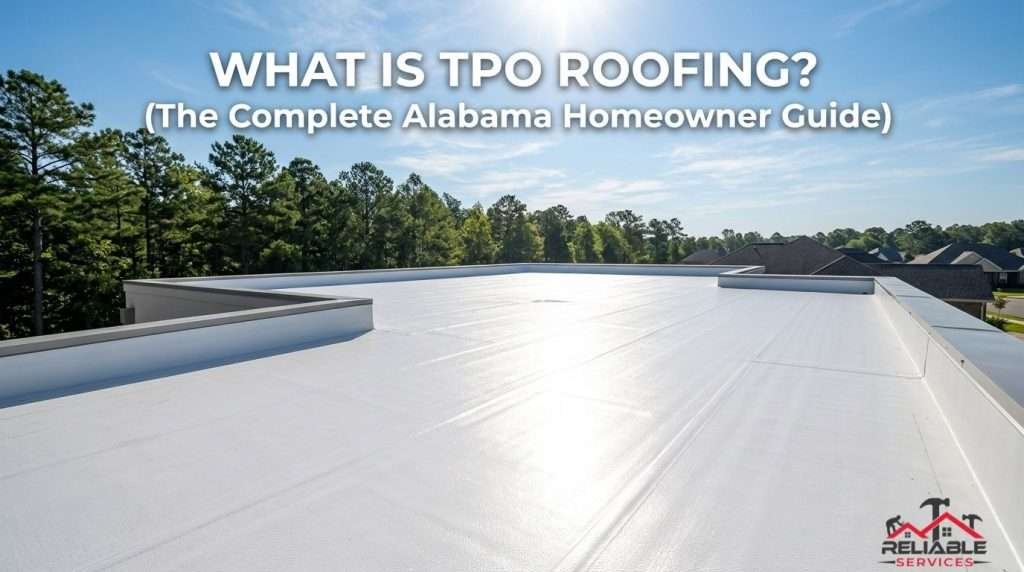
If you are looking for the best roofing material for Alabama homes with flat or low-slope structures, you have likely run across a popular option known as TPO.
TPO roofing, or Thermoplastic Polyolefin, is a single-ply reflective roofing membrane made of synthetic rubber and polypropylene. It is heat-welded across flat or low-slope roofs to create a seamless, waterproof barrier. It is highly prized across the state. Its bright white surface acts as a natural shield against the brutal Southern sun, significantly reducing indoor cooling costs. When properly installed and maintained by an experienced professional, a standard TPO roofing system will reliably last between 15 and 30 years under normal weather conditions.
At Reliable Service Roofing, located at 2700 Corporate Drive, Suite 200, Birmingham, Alabama 35242, we are seeing a massive surge in residential TPO roofing Alabama installations. From contemporary flat-roof homes in Mountain Brook to low-slope patio additions in Hoover, homeowners want sustainable, leak-proof protection that actively slashes their energy expenses. This complete Alabama TPO roofing guide breaks down exactly how this material works, what it costs locally, and how it stacks up against traditional options.
What Is TPO Roofing and How Does It Work?
To understand why a TPO roofing system is so effective, you must look at its chemical engineering and installation layout. TPO stands for Thermoplastic Polyolefin. Despite the complex scientific name, it is essentially a single-layer fabric sheet composed of three integrated parts:
- Polypropylene base layer: Gives the membrane structural rigidity and strength.
- Polyester scrim reinforcement grid: Placed in the middle to prevent punctures, tears, and wind-uplift damage.
- Ethylene-propylene rubber top layer: Infused with specialized UV-resistant additives, fire retardants, and cool roof technology stabilizers.
The Power of Single-Ply White Membrane Roofing
Unlike old-school built-up roofs (BUR) that require messy layers of hot asphalt tar and gravel, TPO arrives at your Birmingham property in large, convenient rolls. These rolls are typically 10 to 12 feet wide.
During a TPO roof installation, our crews unroll these sheets across your roof deck substrate. The magic happens at the seams. Instead of relying on roofing glue or tape—which can dry out, crack, and fail within a few years—installers use a specialized hot-air welding machine. This tool heats the overlapping edges to over 800 degrees Fahrenheit, melting the two independent sheets together at a molecular level. The resulting heat-welded seams are actually stronger than the membrane sheets themselves. This process creates a continuous, completely waterproof roofing membrane across your home.
Is TPO Roofing Good for Alabama Weather?
Alabama weather conditions put incredible stress on residential structures. Our homes must deal with intense UV radiation, extreme summer heat waves, high seasonal humidity, and sudden severe storm lines.
Can TPO Roofing Withstand Alabama Heat?
Absolutely. In fact, fighting extreme heat is where this material truly excels. Standard black asphalt shingles act like heat sponges. They absorb solar radiation and can reach surface temperatures exceeding 150 degrees Fahrenheit on a typical August afternoon in Tuscaloosa. This heat radiates directly down into your attic, forcing your HVAC system to run constantly.
A white TPO membrane acts as a high-performance reflective roofing system. Because it qualifies as certified cool roof technology, it reflects up to 80 percent of solar radiation away from your house. This drop in heat transfer can lower your monthly cooling bills by as much as 20 to 25 percent. This makes it one of the most effective sustainable roofing solutions on the market.
Rain, Wind, and Storm Endurance
From severe spring storms passing through Huntsville to remnants of tropical depressions moving up into Central Alabama, water management is a primary concern for flat surfaces. Flat roofs do not shed water instantly like pitched shingle roofs. Because of this, they are highly prone to “ponding water.” These are standing puddles that remain after a rain event. TPO is completely waterproof and chemical-resistant. It easily handles standing water without degrading. Its reinforced core also resists wind-uplift pressures during intense storms.
TPO vs. EPDM vs. PVC: The Flat Roof Comparison
If you are researching Alabama flat roof replacement options, you will inevitably compare TPO to EPDM (ethylene propylene diene monomer) and PVC (polyvinyl chloride). While all three are single-ply membranes, they have major differences in cost, efficiency, and longevity.
1. TPO vs. EPDM Roofing
EPDM is a traditional synthetic rubber membrane that is typically black.
- The Problem with EPDM in Alabama: Because it is black, it absorbs massive amounts of solar heat. This makes it an inefficient choice for our hot Southern climate.
- Seam Durability: EPDM seams must be held together using chemical adhesives or seam tape. Over time, Alabama’s high humidity and constant thermal movement can cause these glued seams to pull apart. TPO’s heat-welded seams are far more reliable.
2. TPO vs. PVC Roofing
PVC is another white, heat-welded thermoplastic membrane that delivers fantastic performance.
- The Main Difference: PVC contains special plasticizers that make it highly resistant to chemical exposure, greases, and industrial oils. This makes PVC the undisputed king for commercial restaurants with roof-mounted kitchen exhaust hoods.
- The Cost Factor: For residential homes or standard office buildings without chemical exhaust needs, PVC is unnecessarily expensive. TPO offers the exact same heat-welding benefits and energy efficiency as PVC but at a much lower cost per square foot.
TPO Roofing Cost Per Square Foot in Alabama
Let’s look at realistic financial expectations. The total cost to install a TPO roof depends on your building’s size, the number of pipe penetrations, the attachment method used, and whether your project requires a full structural tear-off.
For standard projects, fully installed TPO roofing system costs generally range from $5.50 to $10.50 per square foot.
Estimated Cost Breakdown by Building Size
| Project Size (Sq. Ft.) | Common Residential Use Case | Typical Local Cost Range (Installed) |
| 500 sq ft | Small detached garage or patio overlay | $2,750 – $5,250 |
| 1,200 sq ft | Standard mid-sized low-slope home | $6,600 – $12,600 |
| 2,000 sq ft | Large modern flat-roof residential home | $11,000 – $21,000 |
| 5,000 sq ft | Commercial retail building or church wing | $27,500 – $52,500 |
How Membrane Thickness (Mil) Impacts Your Budget
TPO membranes are measured in “mils” (one-thousandth of an inch). Choosing the right thickness balances your upfront material budget against long-term durability:
- 45-Mil TPO ($5.00 – $7.00/sq. ft. installed): The thinnest option available. While highly economical, it has a shorter lifespan and less resistance to physical punctures. It is best used for budget-constrained projects or temporary structures.
- 60-Mil TPO ($6.50 – $8.50/sq. ft. installed): The industry standard for both residential TPO roofing Alabama and light commercial jobs. It offers an excellent mix of value, puncture resistance, and a reliable 20-year lifespan.
- 80-Mil TPO ($8.00 – $10.50+/sq. ft. installed): A heavy-duty, premium membrane. It features an extra-thick top polymer layer designed to handle frequent foot traffic, severe hail impacts, and long-term UV exposure.

Step-by-Step: The TPO Roofing Installation Process
A TPO system cannot simply be thrown over a roof deck. It requires a systematic, professional installation process to prevent future leaks and wind damage. Here is how our certified crews execute an installation:
Step 1: Substrate Preparation and Tear-Off
First, our crew removes all old, failing roofing materials down to the bare wood or steel deck. We inspect the underlying structural decking for signs of moisture rot or sagging, replacing compromised sheets immediately.
Step 2: Commercial-Grade Insulation Board Laydown
Next, we install high-performance insulation boards, usually Polyisocyanurate (PolyISO). This step is essential because flat roofs lack deep attic spaces for traditional fiberglass insulation. The insulation boards are secured using heavy-duty plates and screws driven directly into the deck.
Step 3: Membrane Layout and Attachment Strategy
The TPO rolls are rolled out across the insulation. Depending on your home’s engineering, we use one of three attachment strategies:
- Mechanically Attached: The sheet is fastened down along its edges using metal plates and screws. This is the fastest and most common method.
- Fully Adhered: A specialized, heavy-duty liquid adhesive is rolled across the insulation board. The TPO sheet is glued down completely flat. This provides incredible wind-uplift resistance and a sleek look.
- Ballasted: The membrane is laid down loose. It is held in place by a heavy layer of smooth river gravel.
Step 4: High-Temperature Robotic Seam Welding
Once the sheets are securely positioned, we use an automatic hot-air walk-behind welder to fuse the overlapping seams. For tight corners, vertical wall flashing, and round pipe penetrations, our technicians hand-weld the membrane using specialized hot-air guns and silicone rollers.
Step 5: T-Joint and Edge Metal Detailing
Finally, we apply unreinforced TPO patches over any structural intersection points (T-joints). We secure heavy-gauge perimeter drip edges to manage rainwater flow safely into your gutters.
Proactive Prevention: TPO Roofing Maintenance Guide
While TPO is exceptionally low-maintenance compared to traditional asphalt or metal roofing, low-slope systems still require basic, consistent attention to reach their maximum lifespan.
- Keep Your Drainage Pathways Clear: Low-slope roofs rely heavily on specific drainage routes. Because of this, check your drains, scuppers, and downspouts frequently. Remove leaves, pine needles, and twigs that accumulate after local storm events to prevent ponding water.
- Perform Seasonal Washdowns: Over time, airborne dust, tree sap, and atmospheric pollution can form a dark film across your white membrane. Washing your roof with a soft-bristle broom and a mild, biodegradable cleaner once a year restores its high reflectivity. This simple step keeps your energy bills low.
- Control Foot Traffic Access: Limit how often people walk on the bare membrane if you have rooftop HVAC units or an upper-floor balcony overlooking your flat roof. If service technicians must work on your AC units, ensure they place protective rubber walkway pads down. This prevents accidental tool punctures.
- Inspect Your Flashings Post-Storm: Walk your roof after any major severe weather outbreak or hail event. Look closely at the vertical wall flashings and pipe boots. This helps ensure no flying debris has sliced or punctured the membrane.
Serving Our Local Communities Across Alabama
At Reliable Service Roofing, our expertise extends far beyond our main office hub on Corporate Drive in Birmingham. We provide tailored residential and commercial solutions designed for the unique regional needs of homeowners throughout the state:
- Greater Birmingham Metro: Serving neighborhoods from Hoover, Vestavia Hills, and Mountain Brook down to Pelham, Alabaster, and Trussville. We ensure historical and modern homes alike comply with strict Jefferson and Shelby County building codes.
- East Alabama & Surrounding Counties: Providing reliable property protection across Chelsea, Leeds, Moody, and the surrounding residential communities along the US-280 corridor.
- North Alabama (Huntsville & Madison): Helping tech-sector homeowners upgrade to modern, high-efficiency standing seam profiles built to handle heavy valley storms.
- West Alabama (Tuscaloosa & Northport): Replacing storm-damaged roofing systems with long-lasting metal upgrades engineered for longevity.
- Central Alabama (Montgomery & Prattville): Delivering reliable, cost-effective roofing options that withstand intense summer heat waves.

When to Call a Professional in Birmingham AL
Working on low-slope and flat roofs comes with unique structural risks. These tasks require specialized professional training. You should immediately reach out to the Alabama TPO roofing experts at Reliable Service Roofing if you encounter any of these issues:
- Active Interior Ceiling Leaks: Water has bypassed the membrane if you notice water stains, peeling paint, or dripping water on ceilings directly beneath your low-slope roof.
- Widespread Ponding Water: Your drainage slope is compromised and requires structural correction if large puddles remain on your roof more than 48 hours after a heavy rainstorm.
- Visible Seam Separation: The original heat weld was done improperly or has aged out if you notice the edges of your TPO sheets curling, lifting, or pulling apart. This creates an immediate leak risk.
- Blistering or Billowing Membrane: Your mechanical fasteners or liquid adhesives have detached from the deck below if you notice large air bubbles forming beneath the surface, or if the roof looks like it is lifting or billowing up like a sail during high wind events.
Why Choose Reliable Service Roofing for Your TPO Installation in Birmingham?
Your roof protects your single greatest financial asset. Low-slope and flat roofing systems leave zero room for installation errors. A single cold weld or an unsealed pipe penetration can cause thousands of dollars in structural water damage.
At Reliable Service Roofing, we do not cut corners. We treat your property with absolute professional care. We draw on our deep expertise in Southern weather demands. Our installation crews are fully certified, licensed, and equipped with industrial-grade automatic hot-air welding technology. Whether you need a complex commercial flat roof repair in downtown Birmingham or a modern residential TPO roofing Alabama installation in Shelby County, we deliver long-lasting, leak-free results that keep your cooling costs low.
FAQ
TPO is a highly reflective, single-ply rubberized plastic membrane designed specifically to provide durable, waterproof protection for flat and low-slope roofs.
A standard, professionally installed TPO roof will reliably last between 15 and 30 years depending entirely on the membrane thickness, installation quality, and local weather conditions.
Yes, TPO is incredibly energy efficient because its bright white reflective surface bounces solar radiation away from your building, lowering indoor cooling bills by up to 25 percent.
Yes, TPO is an outstanding choice for Alabama homes with flat or low-slope structures because it resists severe storms and actively lowers energy costs during our intense summer heat waves.
Fully installed TPO roofing systems across Alabama generally run between $5.50 and $10.50 per square foot, depending heavily on insulation requirements and layout complexity.
Yes, TPO is significantly better than EPDM for hot climates like Alabama because TPO reflects solar heat and features ultra-durable heat-welded seams, whereas black EPDM absorbs heat and relies on glued seams.
Yes, by reflecting up to 80 percent of solar heat away from your attic space, TPO keeps your home naturally cooler and drastically reduces your monthly HVAC electricity consumption.
Ready to Secure Your Flat or Low-Slope Roof? Don’t wait for a small ponding puddle to turn into an expensive interior structural leak. Whether you need a detailed structural inspection, an urgent flat roof repair, or a high-efficiency replacement estimate, our local team is ready to deliver.