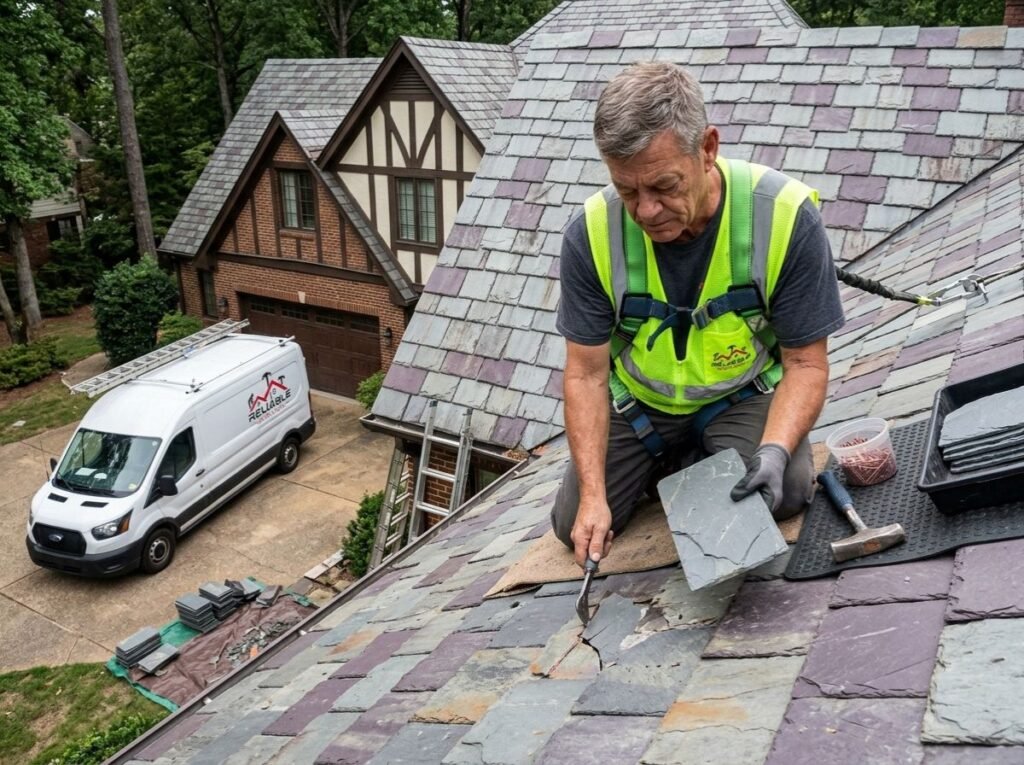
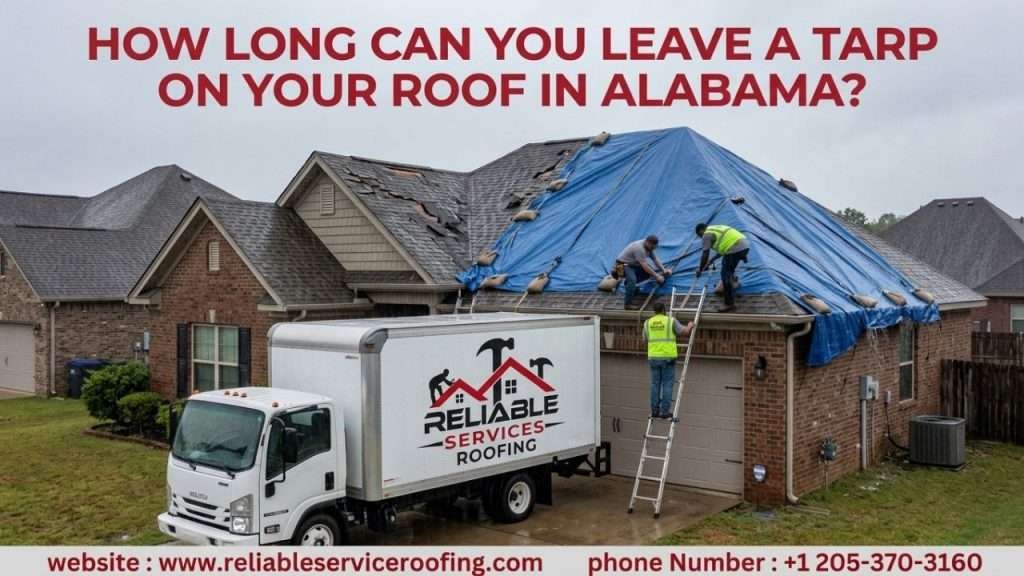
Hey there, I’m a local roofing expert with Reliable Services Roofing serving Birmingham, Hueytown, and the entire central Alabama region. After a storm, one of the most common questions I get from homeowners is: “How long can I leave a tarp on my roof?” and “How long does a roof tarp actually last?”
If your roof has been damaged by hail, wind, or a fallen tree, a temporary tarp can be a lifesaver. It stops water from entering your home and prevents thousands of dollars in additional damage. However, many homeowners in Birmingham, Hueytown, Pleasant Grove, and surrounding communities wonder how long they can safely leave that tarp in place before it causes more problems than it solves.
At Reliable Services Roofing, we’ve installed, maintained, and removed hundreds of roof tarps after storms in Jefferson County. In this very long and detailed guide, I’ll explain exactly how long you can leave a tarp on your roof, how long a quality tarp typically lasts in Alabama’s climate, the risks of leaving it too long, when you should replace the roof instead of relying on a tarp, real local examples from the Birmingham area, and what steps you should take right now to protect your home.
Understanding Roof Tarps: What They Are and Why They Matter in Alabama

A roof tarp is a heavy-duty, waterproof sheet (usually made of reinforced polyethylene or similar durable material) that is secured over a damaged section of your roof to act as a temporary barrier against rain, wind, and debris. In Alabama, where we experience frequent thunderstorms, hail events, and occasional high winds, roof tarps are a common emergency solution after storm damage.
Reliable Services Roofing always recommends professional tarp installation because a poorly secured tarp can blow off during the next storm and cause even more damage. A properly installed tarp can buy you valuable time to arrange permanent repairs, but it is never meant to be a long-term solution.
How Long Can You Safely Leave a Tarp on Your Roof in Alabama?
The honest answer is: A roof tarp should only be left in place for a short period — ideally no more than 2 to 4 weeks maximum.
In our humid, storm-prone Alabama climate, leaving a tarp on longer than one month significantly increases the risk of additional damage. Here’s why:
- UV Degradation — Alabama’s intense sunlight breaks down tarp material quickly. Most quality tarps begin to weaken after 30–45 days of direct sun exposure.
- Wind and Storm Risk — A tarp that has been in place for weeks can become loose or torn, turning it into a dangerous projectile during the next thunderstorm.
- Moisture Trapping — Tarps can trap heat and moisture underneath, accelerating rot in roof decking and promoting mold growth in attics.
- Insurance Complications — Many insurance companies in Alabama expect permanent repairs within 30 days of temporary tarping. Leaving a tarp longer can complicate or reduce your claim payout.
Reliable Services Roofing recommends treating a tarp as a true emergency measure only. The goal is to protect your home until a permanent roof repair or replacement can be completed — usually within 2–3 weeks at most.
How Long Does a Roof Tarp Actually Last in Alabama’s Climate?
The lifespan of a roof tarp in Alabama depends on several local factors:
| Tarp Quality | Expected Lifespan in Alabama | Best Use Case |
|---|---|---|
| Basic Blue Poly Tarp | 7–14 days | Very short-term emergency protection |
| Reinforced Heavy-Duty Tarp | 2–4 weeks | Standard storm damage protection |
| Professional Contractor Tarp | 4–8 weeks | High-quality temporary solution |
| Industrial-Grade Tarp | Up to 3 months | Only with regular professional maintenance |
In practice, most tarps we install in Birmingham and Hueytown start showing signs of wear after 3–4 weeks due to our intense UV rays and frequent storms. By 45–60 days, many tarps become brittle, tear easily, or pull away from the roof edges.
The Real Risks of Leaving a Tarp on Your Roof Too Long
Leaving a tarp in place for months can create new problems that are often more expensive than the original roof damage:
- Mold and Mildew Growth — Trapped moisture under the tarp creates perfect conditions for mold in your attic.
- Wood Rot — Prolonged moisture softens roof decking and trusses.
- Further Shingle Damage — Wind can lift the tarp and cause more damage to surrounding shingles.
- Insurance Claim Issues — Delaying permanent repairs can lead to denied or reduced coverage.
- Structural Concerns — In extreme cases, water trapped under a tarp can weaken the entire roof structure.
We once helped a homeowner in Pleasant Grove who left a tarp on for almost four months. What started as a small storm repair turned into $18,000 in mold remediation and deck replacement.
When You Should Replace Your Roof Instead of Relying on a Tarp
If your roof is more than 15–20 years old or has widespread damage, a tarp is only a temporary bridge. In many cases, it makes more financial sense to proceed with a full roof replacement rather than patching and tarping repeatedly.
Signs It’s Time for a Full Roof Replacement:
- Multiple leaks in different areas
- Significant granule loss or curling shingles
- Previous storm damage that was only tarped
- Roof age over 18–20 years
- Visible sagging or soft spots in the roof
Reliable Services Roofing provides honest assessments and can help you decide whether a full replacement or targeted repair is the smarter long-term choice.
How Reliable Services Roofing Handles Roof Tarps and Permanent Repairs
When you call Reliable Services Roofing after storm damage, here’s exactly what we do:
- Fast emergency response — often same-day tarp installation
- Thorough roof inspection to assess full damage
- Honest recommendation — repair vs full replacement
- Professional, secure tarping with high-quality materials
- Coordination with your insurance company
- Permanent repair or replacement once approved
We never leave you with a tarp longer than necessary. Our goal is always a permanent, high-quality solution.

Prevention Tips to Avoid Future Roof Leaks in Alabama
• Inspect your roof twice a year (spring and fall)
• Keep gutters clean and free of debris
• Trim overhanging tree branches
• Address small shingle damage immediately
• Schedule professional roof inspections annually
A roof tarp is a temporary solution only. Don’t risk expensive water damage, mold, or structural issues by leaving it in place too long. Contact Reliable Services Roofing today for a free roof inspection and professional evaluation of your damage.
Call us now or visit our main roof tarping page.
Reliable Services Roofing — Your trusted local experts for emergency tarping and permanent roof repairs throughout central Alabama.
FAQs
Ideally no longer than 2–4 weeks. Beyond that, risks increase significantly in Alabama’s climate.
Most policies cover temporary tarping after covered storm damage. We help document this for your claim.
Yes — it can trap moisture, promote mold, and damage shingles underneath.
Most emergency tarps range from $250 to $850 depending on size and accessibility.
Only as a very temporary measure. Professional installation is much safer and more secure.
In Alabama conditions, a professional-grade tarp typically lasts 4–8 weeks before needing replacement.
We are local experts who provide fast, secure tarping and honest recommendations for permanent repairs.