If your home has suffered sudden storm damage, you might be wondering: Can you tarp a roof without nails? Yes, you can absolutely tarp a roof without using nails by utilizing heavy-duty sandbags, framing lumber weight matrices, or specialized roof-grip adhesive tapes. This no-nail roof tarping method is the best way to secure temporary protection because it prevents you from driving holes into perfectly good shingles, preventing further leaks while you wait for a professional roofing crew to arrive.
For homeowners dealing with an unexpected roof leak emergency service Birmingham situation, minimizing structural damage immediately is crucial. However, standard emergency tarping often involves hammering framing nails or screws directly through a tarp and into your roof deck. While this works in a pinch, it can permanently ruin underlying shingles that weren’t even damaged by the initial storm.
As a trusted local roof tarping contractor Alabama resource, Reliable Service Roofing has put together this definitive, long-form guide. We’ll show you exactly how to secure a tarp on a roof without nails, protect your equity, avoid common DIY blunders, and successfully navigate the harsh severe weather patterns unique to Jefferson and Shelby Counties.
Why Choose Emergency Roof Tarping Without Nails?
When severe convective storms, tornadoes, or heavy microbursts tear through the greater Birmingham metro area, flying debris and fallen oak limbs frequently rip away shingles. This exposes your underlayment and leads to immediate interior ceiling leaks.
While an emergency roof tarp after storm damage is universally recommended, how you install that tarp dictates your long-term repair costs.
The Inherent Danger of Using Nails for Temporary Protection
Most generic DIY tutorials tell you to wrap a tarp around 2×4 wooden boards and nail them straight into the roof canopy. Here is why our experts advise against this:
- Destruction of Valid Shingles: Driving dozens of nails into areas of your roof that survived the storm unscathed creates brand-new water entry points.
- Insurance Claim Complications: Some insurance adjusters may argue that the additional holes driven into the roof during a DIY installation constitute “negligent secondary damage,” potentially complicating your payout for a full storm damage roof repair Birmingham AL claim.
- Voided Manufacturer Warranties: Piercing architectural shingles outside of official manufacturer guidelines can void your existing material warranties.
Utilizing a temporary roof protection without nails strategy safeguards your home without compromising the structural integrity of your undamaged roofing components.
What is the Best Way to Tarp a Roof Without Nails?
Depending on the pitch of your roof, your available materials, and how safely you can access the damage, there are three primary methods to achieve a secure, wind resistant roof tarp installation without a hammer and nails.
1. The Sandbag and Tension Weight Matrix Method
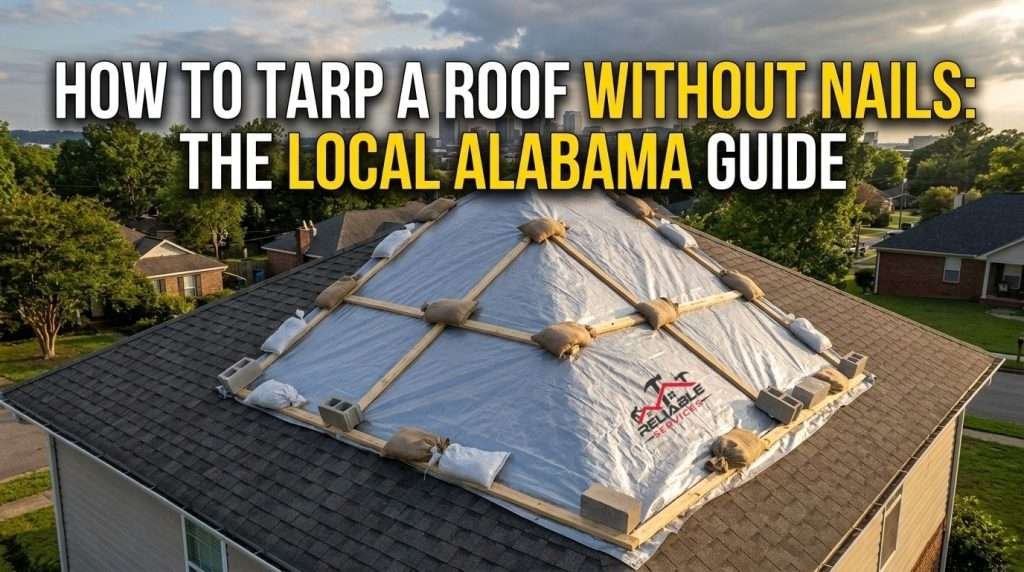
This is the preferred, professional-grade no-nail roof tarping method. It relies on gravity, friction, and tension. Heavy-duty, UV-stabilized woven polypropylene sandbags are strategically placed along the perimeter and valleys of the tarp. By linking sandbags across the ridge cap with high-tensile paracord, you create an anchor system that holds the tarp tight against winds of up to 40–50 mph without a single mechanical fastener penetrating the decking.
2. The Perimeter Framing Timber Weight System
For flat or low-slope roofs common in some mid-century residential pockets across Vestavia Hills and Mountain Brook, you can build an unattached exterior wooden grid. By wrapping the edges of your tarp tightly around 2×4 or 4×4 framing lumber and weighting those timbers down with heavy solid concrete blocks or sandbags, the weight of the timber perimeter keeps the tarp flat, stopping wind from getting underneath and lifting it away.
3. Specialized Polyurethane Roof-Adhesive Tapes
Certain manufacturers produce ultra-aggressive, clean-removal roofing tapes designed to bond directly to asphalt shingles, metal panels, or concrete tiles. These adhesive systems seal the edges of the tarp directly to the roof surface, providing airtight roof leak protection Alabama homeowners can rely on for a brief window while scheduling full restoration services.

Step-by-Step Guide: How to Tarp a Roof Without Nails
If you are comfortable working at heights and have determined it is entirely safe to climb up, follow this detailed execution plan for a clean, reliable roof tarp installation without nails.
Tools and Materials Required
- Heavy-Duty Tarp: Choose a thick, cross-laminated polyethylene tarp (preferably 10-mil to 12-mil thickness, silver or brown UV-resistant coating). Ensure it extends at least 4 feet past the damaged area in all directions.
- Sandbags: 10 to 20 woven polypropylene sandbags filled with clean coarse sand (roughly 30–40 lbs each).
- Heavy-Duty Paracord or Poly Rope: 3/16-inch or 1/4-inch diameter for tensioning across the roof ridge.
- Framing Lumber: Four to six exterior-grade 2×4 boards (if using the perimeter timber weight system).
- High-End Utility Knife & Work Gloves: For safety and sizing adjustments.
Step 1: Safety First and Damage Assessment
Never climb onto a wet, slick, or structurally compromised roof canopy. Wait until the active storm cell has completely passed out of Jefferson County, the sun is out, and the surface materials are 100% dry. Inspect the roof from the ground first to spot overhead power lines or hanging tree branches.
Step 2: Clear Away Debris
Carefully clear out any broken branches, loose shingle granules, hail stones, or organic matter from the target area. The surface must be clean so the tarp lies perfectly flat. If the tarp sits over debris, wind will easily get underneath, create a sail effect, and tear it away from its anchors.
Step 3: Unroll and Position the Tarp
Unroll your tarp so that it completely blankets the compromised section.
CRITICAL ROOFING RULE: Always run the top edge of your tarp completely over the peak (the ridge cap) of the roof and drop it down at least 3 to 4 feet onto the opposite slope. This prevents pooling water from running down the upper roof slope and slipping underneath the top seam of your tarp.
Step 4: Construct the Weight and Tension Matrix
If you’re using the sandbag method, place sandbags directly along the top edge of the tarp over the ridge line. Tie paracord from the top grommets or wrapped corners of the tarp down to heavy counterweights anchored on the ground, or tie them across the roof peak to a secondary network of sandbags resting safely on the opposite slope. Spacially distribute sandbags every 2 to 3 feet along the perimeter edges to form an unbroken seal against incoming drafts.
Step 5: Secure the Perimeter Edges
If utilizing framing lumber instead of individual sandbags, wrap the lower and lateral edges of the tarp around your 2×4 boards two or three times to form a tight, wrapped roll. Place these weighted rolls flat against the shingles and lay sandbags or solid concrete masonry blocks directly on top of the wood to lock it down against the roof deck.
Essential Safety Warnings for DIY Roof Tarping
Falling from a roof is a leading cause of severe residential DIY injuries. If you are attempting a DIY roof tarping without nails project, keep these non-negotiable safety standards top of mind:
- Avoid Steep Pitches: If your home features a steep roof pitch (greater than a 6:12 slope, typical in many historic homes around the Highlands or Forest Park areas), do not attempt to walk on it without professional fall-protection harnesses and roof anchors.
- Beware of Invisible Structural Weakness: If a large tree branch has struck your house, the rafters or OSB plywood decking underneath your shingles could be fractured. Stepping onto an unsupported, compromised deck sheet could cause an immediate collapse.
- Monitor the Weather: Never try to install a temporary roof covering Alabama during high winds or while lightning flashes are present anywhere in the area. A gust of wind catching a large 20×30 tarp can easily pull an adult off a roof ladder.
Critical DIY Mistakes to Avoid
Over our years serving the local community, we have seen well-meaning homeowners inadvertently cause thousands of dollars in extra damage due to poor tarping practices. Avoid these three common pitfalls:
- Tarping Below the Ridge Line: Tarping an isolated hole in the middle of a slope without running the tarp up over the peak. Rainwater from higher up will simply flow down the roof, pool behind your top edge, and run beneath the tarp directly into your attic.
- Using Too Few Weights: Underestimating wind lift. A mild 20 mph breeze can generate tremendous lifting pressure beneath a loose sheet of plastic. If your sandbags are too light or spaced too far apart, the tarp will flap, shred, and beat against your remaining shingles, wiping away their protective protective ceramic granules.
- Using Raw Bricks or Sharp Blocks: Placing raw, jagged concrete blocks or bricks directly onto bare shingles without a tarp buffer. The abrasive edges of concrete will gouge and scrape away the asphalt coating on your valid shingles, creating secondary leaks.
Comprehensive Regional Breakdown: Service Areas Across the Birmingham Metro
At Reliable Service Roofing, we don’t just service downtown Birmingham. Our fully equipped emergency response vehicles travel daily out to your neighborhoods to provide premium temporary roof leak repair with tarp installations and permanent structural insurance restoration.
Our primary operational hub is located dynamically near 2700 Corporate Drive, Suite 200, Birmingham, Alabama 35242, positioning our emergency response teams perfectly along the heavily traveled US-280 corridor. This strategic footprint allows us to maintain some of the fastest dispatch response windows for emergency roof tarping Alabama services across both Jefferson and Shelby Counties.
Temporary Roof Tarping: Cost Analysis and Value
Whether you live in a historic bungalow in Avondale, a sprawling estate in Liberty Park, or a family home out in the growing suburban sectors of Calera, McCalla, or Helena, our teams understand our local building codes, neighborhood homeowner association (HOA) rules, and regional weather dynamics inside and out.
Understanding the true costs of emergency property protection helps you make smart decisions when negotiating with your home insurance providers.
| Tarping Strategy | Average Upfront Cost | Risk Level to Roof | Wind Resistance Performance |
| DIY No-Nail Tarping | $75 – $200 (Materials Only) | Low (Safe for shingles) | Moderate (30-50 mph gusts) |
| Professional No-Nail Tarping | $400 – $900 (Labor & Materials) | Zero Risk | High (Up to 65 mph gusts) |
| Traditional Nailed-Down Tarping | $350 – $750 (Labor & Materials) | High (Punctures good shingles) | Very High (Structural hold) |
Will Homeowners Insurance Cover Professional Roof Tarping?
Yes, in almost all scenarios! Your homeowners insurance policy explicitly states that the homeowner has a legal duty to mitigate further damage to the property after a loss event.
If you hire a licensed local roof tarping contractor Alabama firm to deploy an advanced, professional no-nail roof tarping method, keep your receipt. The expense is almost always fully reimbursable as part of the “Loss Mitigation” component of your storm damage claim.
Long-Term Prevention and Roofing Maintenance Recommendations
The best way to handle an emergency roof tarping situation is to prevent the need for one altogether. After our local storm season blows through, use these simple maintenance strategies to protect your home:
- Keep Canopy Trees Trimmed Back: Ensure large oak, pine, and sweetgum tree branches are trimmed back at least 6 to 10 feet away from your roofline. This eliminates the risk of heavy limbs snapping off during a severe thunderstorm and puncturing your roof deck.
- Schedule Annual Roof Inspections: Minor flaws, like unsealed shingle tabs or rusted flashing around pipe boots, can easily be torn away by mild wind gusts. Fixing these minor issues early prevents total system failures when major storms blow in.
- Clear Out Valley Debris and Gutters: When your gutters clog with leaves and pine needles, water backlogs up under the eave shingles. This rots out your fascia boards and roof decking, leaving those areas structurally weak and prone to blowing off in high winds.

When to Call a Professional in Birmingham, AL
While taking a DIY approach to a minor leak can be tempting, there are distinct situations where attempting to tarp your own roof becomes far too dangerous or ineffective. You should immediately call in a professional if:
- The Structural Decking is Sagging: If you see any visible sagging from the ground or inside your attic, the roof structure is compromised. Walking on it puts you at risk of falling through.
- The Pitch is Too Steep: Any roof with a steep slope requires specialized staging, roof brackets, and safety harnesses to navigate safely.
- The Damage is Extensive: If entire slopes of shingles have been stripped away, a standard store-bought tarp won’t cut it. You will need massive industrial tarps installed with professional tensioning equipment to ensure your home stays dry.
- Active Standing Water or Lightning: If rain is still pouring down or lightning is active in the area, stay off the roof. A wet roof surface is incredibly slick, making a fall highly likely.
Why Choose Us for Your Storm Damage Roof Repair in Birmingham, AL?
When a storm hits your home, you need an experienced, responsive, and trustworthy team to step in and secure your property. Reliable Service Roofing is dedicated to providing high-quality, professional support to our neighbors across the Birmingham area.
We treat your property with the absolute highest level of care. Our priority is implementing a damage-free, no-nail tarping solution whenever possible, keeping your roof safe from extra puncture holes while we plan your long-term repairs. We provide detailed photographic documentation and clear, transparent digital estimates, giving your insurance adjuster exactly what they need to process your claim quickly and smoothly.
Protect Your Investment with Reliable Service Roofing
Don’t let a temporary storm damage situation turn into a major, costly headache down the road. If your home has been hit by a severe storm, our team is ready to provide fast, professional care to keep your property dry and secure.
Explore our specialized Birmingham Roof Repair Services to see how we handle everything from minor leak repairs to full storm restoration projects.
Ready for your professional inspection? Contact Reliable Service Roofing today to speak with an experienced local roofer, get your questions answered, and schedule a dependable, storm-ready inspection for your home.
FAQ
Yes, you can reliably secure a roof tarp without nails by utilizing heavy sandbags, an external weighted lumber grid, or industrial-grade roof adhesive tapes.
The best approach is the sandbag tension system, where heavy sandbags are placed across the roof ridge line to hold the tarp flat against strong winds without puncturing your shingles.
You secure the tarp by wrapping its perimeter edges around 2×4 wooden boards and weighting those boards down with heavy sandbags or flat concrete blocks.
Yes, home insurance policies typically cover the cost of professional emergency tarping under the homeowner’s mandatory duty to mitigate further property damage.
A professionally installed, weighted no-nail roof tarp can easily withstand weather elements for 30 to 90 days, giving you plenty of time to arrange permanent repairs.
We advise against using loose, raw bricks because their rough surfaces can scrape away protective ceramic granules from your valid shingles and they can easily slide off steep slopes.
Get everyone out of the house safely, call your emergency services if power lines are involved, and contact a certified roofing professional immediately to check the home’s structural safety before anyone steps onto the roof.