Tarping a roof is a temporary emergency measure to stop water intrusion and protect your home after storm damage, fallen trees, hail, or high winds until permanent repairs can be made. In Birmingham, AL, where severe thunderstorms, tornadoes, and heavy rains strike frequently, knowing how to tarp a roof safely can prevent thousands in additional interior damage. While DIY tarping is possible for small, low-slope areas, most homeowners in the Birmingham metro should call a professional roof tarp service for safety and long-term results.
At Reliable Service Roofing, we’ve helped hundreds of Birmingham families with emergency roof tarping and storm damage roof repair after everything from spring tornado outbreaks to summer microbursts. This complete guide covers everything you need to know about roof tarping, temporary roof tarp installation, safety, costs, and when to call the pros serving Birmingham, Hoover, Vestavia Hills, and nearby areas.
What Is Emergency Roof Tarping and Why It Matters in Birmingham, AL
Emergency roof tarping (also called roof tarping or tarping a roof) involves covering damaged sections with a heavy-duty waterproof tarp to act as a temporary shield. It’s not a permanent fix—it’s a critical first step in storm damage roof repair to buy time for insurance claims and full restoration.
Birmingham’s weather makes roof tarping especially important. Alabama sits in “Dixie Alley,” where high winds, hail, and wind-driven rain routinely lift shingles, bruise granules, and create entry points for leaks. A single thunderstorm can cause hidden damage that leads to ceiling stains, mold, or structural issues if left exposed. Our team at Reliable Service Roofing responds to dozens of emergency tarp service calls every storm season from our office at 2700 Corporate Drive Suite 200, Birmingham, Alabama 35242.
Safety First: How Do You Tarp a Roof Safely?
The number-one rule for how to tarp a roof safely is: if it feels dangerous, don’t do it. A damaged roof can be unstable, and falls are a leading cause of homeowner injuries.
- Inspect from the ground or attic first using binoculars or a drone. Take photos for your insurance claim.
- Never tarp during active rain, high winds, lightning, or at night.
- Wear non-slip boots, gloves, safety glasses, and a full-body harness with roof anchors if working above one story.
- Use a sturdy ladder and always have a spotter (buddy system).
- Avoid loose clothing that can catch on nails or shingles.
In our experience with emergency roof tarping Birmingham AL clients, skipping safety gear is the most common mistake we see—and one that leads to preventable ER visits.
Materials and Tools Needed for Proper Roof Tarp Installation
For effective roof tarp installation that lasts through Birmingham’s unpredictable weather, use only commercial-grade materials:
- Heavy-duty reinforced polyethylene tarp (minimum 6–10 mil thick, UV-resistant, preferably 10–12 mil with grommets).
- 2×4 wooden boards (or 1×4 strapping) cut to length for edge anchoring.
- Long deck screws or galvanized nails with large washers (to penetrate into the roof decking/sheathing, not just shingles).
- Hammer, cordless drill, roofing nailer, utility knife, broom/rake for debris.
- Duct tape, roof sealant tape, rope, bungee cords, or sandbags for extra security.
- Optional: synthetic underlayment for added protection under the tarp.
Cheap blue tarps from big-box stores tear easily in Alabama winds—invest in quality to avoid repeat visits.

Step-by-Step Guide: How to Tarp a Roof After a Storm
Here’s the exact step-by-step guide to temporary roof repair with tarp for homeowners we recommend (and use ourselves):
- Clear debris — Remove loose shingles, branches, nails, and leaves so nothing punctures the tarp.
- Measure and position — Choose a tarp large enough to cover the damage plus at least 4–5 feet extra on all sides. Drape it over the ridge line if possible so water sheds off both sides.
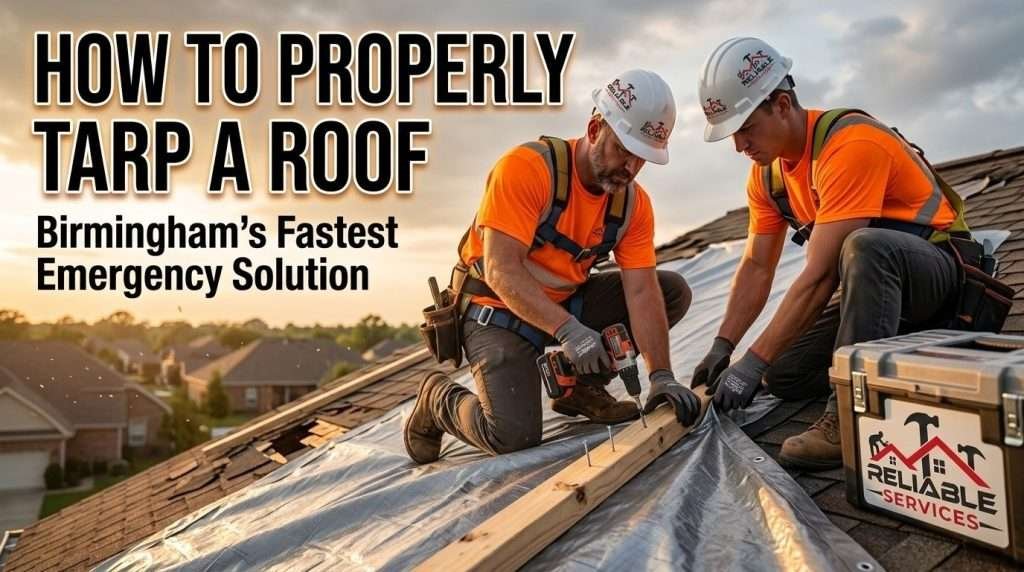
- Secure with boards (best method) — Wrap tarp edges around 2×4 boards placed perpendicular to the slope. Screw or nail boards directly into the roof deck every 12–18 inches. This distributes wind force and prevents tearing.
- Seal edges and penetrations — Tuck the top edge under intact shingles when possible. Tape around chimneys, vents, and seams. Never fully cover vents.
- Add weights and final checks — Use sandbags on lower edges if needed. Walk the roof safely to ensure the tarp is taut with no wrinkles or gaps.
- Document everything — Photograph the finished temporary roof tarp for insurance.
This process follows best practices for emergency roof tarping to prevent leaks and works for most asphalt shingle roofs common in Birmingham neighborhoods.
How to Secure a Tarp on a Roof and Avoid Common Mistakes
How to attach a tarp to a roof correctly means never nailing directly through shingles without boards—doing so creates new holes and causes the tarp to rip in the next wind gust. Other frequent errors we see in tarping a roof calls:
- Using a tarp that’s too small or thin.
- Placing boards horizontally (creates water dams).
- Leaving wrinkles that pool rainwater.
- Tarping unstable decking without professional inspection.
Follow the best way to tarp a damaged roof with 2×4 boards and you’ll dramatically reduce the chance of further damage.
What Size Tarp Do I Need for Roof Damage?
A good rule: measure the damaged area and add 4–5 feet of overhang on every side. For a 10×10 foot hole, you’ll need at least a 20×20 foot tarp (or larger to reach the ridge). Oversizing is always better than undersizing when asking what size tarp do I need for roof damage.
How Long Can You Leave a Tarp on Your Roof?
A properly installed temporary roof cover after storm damage should stay on no longer than 60–90 days maximum—ideally much less. UV exposure and Alabama winds cause tarps to degrade, fade, and tear after about two months. Schedule a professional inspection after 30 days and plan permanent storm damage roof repair as soon as your insurance claim is approved.
Cost of Professional Roof Tarp Service in Birmingham, AL
Many homeowners ask about pricing before calling for roof tarp service. In the Birmingham area, professional emergency roof tarping typically costs between $300 and $1,500 for an average single-family home, with most jobs landing in the $600–$2,000 range depending on roof size, pitch, accessibility, and urgency.
Factors that affect emergency roof tarping Los Angeles—wait, no, here in Birmingham—include after-hours calls (add 30–40% premium), steep roofs, and large damage areas. DIY materials alone might run $50–$250, but professional installation includes safety equipment, proper anchoring, insurance compliance, and faster response. We always provide transparent, upfront pricing and work directly with insurance adjusters.
When to Call a Professional in Birmingham for Roof Tarping
Can you tarp a roof yourself? Only if the damage is small, low on a gentle slope, and you’re comfortable with heights. Call a licensed roof tarp service immediately if:
- Damage spans more than 100 sq ft.
- The roof is steep or has multiple layers.
- You see sagging decking or structural concerns.
- It’s after dark or during active weather.
- You need documentation for an insurance claim.
At Reliable Service Roofing, our 24/7 emergency roof repair near me team arrives fast with the right equipment and experience to handle even the toughest Birmingham storms.

Why Choose Reliable Service Roofing for Emergency Roof Tarping in Birmingham, AL
When you need trusted emergency tarp service or roof tarping near me in the 35242 area, choose a local company that knows Alabama weather inside and out. Reliable Service Roofing offers:
- 24/7 emergency response with rapid deployment.
- Fully licensed, insured, and experienced crews.
- Same-day tarping and assistance with insurance claims.
- High-quality materials that actually withstand Birmingham winds and hail.
- Service across the entire metro—Birmingham, Hoover, Vestavia Hills, Homewood, Mountain Brook, Alabaster, Pelham, Helena, and more.
Our clients tell us the difference is clear: professional installation means fewer leaks, faster permanent repairs, and peace of mind.
Prevention Tips and Roof Maintenance Recommendations for Birmingham Homes
The best roof tarping is the one you never need. Protect your Birmingham home with:
- Annual roof inspections before tornado and hurricane season.
- Keep trees trimmed away from the roof.
- Clean gutters and downspouts regularly.
- Replace damaged shingles promptly.
- Consider impact-resistant shingles if replacing soon.
These small steps dramatically reduce the need for future temporary roof tarp interventions.
Serving Nearby Areas: Roof Tarping in Hoover, Vestavia Hills, and Beyond
Reliable Service Roofing proudly serves the entire Birmingham metro from our Corporate Drive location. Whether you need emergency roof tarping Hoover, roof tarp service Vestavia Hills, storm damage roof repair Homewood, or roof tarping Mountain Brook, our crews are just minutes away. We also cover Alabaster, Chelsea, Helena, Pelham, and surrounding communities. No matter your ZIP code, we deliver fast, reliable emergency roof repair near me service tailored to local conditions.
FAQs
The safest way is to use heavy-duty tarps secured with 2×4 boards screwed into the roof decking while wearing proper fall protection—though we strongly recommend hiring professionals for most homes.
Wrap edges around 2×4 boards and fasten directly into the sheathing every 12–18 inches for maximum wind resistance.
Add at least 4–5 feet of overhang beyond the damaged area on all sides and extend over the ridge when possible.
No longer than 60–90 days maximum—schedule permanent repairs sooner to avoid further deterioration.
Small, low-slope jobs may be DIY, but for safety and insurance compliance, most Birmingham homeowners should call a licensed roof tarp service.
Professional services typically range from $300–$2,000 depending on roof size and urgency—contact us for a free, same-day estimate.
Follow the step-by-step process above or call Reliable Service Roofing for immediate 24/7 assistance across the metro.
Ready to protect your Birmingham home? Don’t wait for the next storm. If you need fast emergency roof tarping, temporary roof tarp installation, or full storm damage roof repair, contact Reliable Service Roofing today. We’re local, responsive, and ready to help homeowners across Birmingham, Hoover, Vestavia Hills, and beyond. Call or visit our roof repair service page now: Roof Repair in Birmingham, AL