The best way to tarp different roof types is with a heavy-duty reinforced polyethylene tarp (10–16 mils thick) secured using roof-specific methods: battens and nails on shingle roofs, magnetic anchors or screws on metal roofs, and perimeter weights plus adhesive on flat roofs. This approach creates a reliable temporary roof covering that stops leaks immediately after storm damage. In Birmingham AL, where sudden thunderstorms and hail can strip shingles or dent metal panels in minutes, knowing exactly how to tarp a shingle roof, metal roof, or flat roof can save homeowners thousands in water damage.
At Reliable Service Roofing, we install emergency roof tarp solutions every week across the Birmingham metro. Whether it’s a leaking shingle roof in Vestavia Hills or storm damage on a flat commercial roof in Hoover, the right roof tarp methods make all the difference. This complete roof tarping guide walks you through every step, safety rules, and local Alabama conditions so you can protect your home until permanent repairs arrive.
Why Roof Type Matters for Emergency Roof Tarp Installation
Not all roofs handle tarps the same way. Birmingham’s mix of traditional shingle homes, modern metal roofs, and occasional flat-roof commercial buildings means your roof tarping guide must match the surface.
- Shingle Roofs (most common in residential Birmingham): Sloped and textured — tarps slide easily if not tucked under shingles.
- Metal Roofs: Smooth and slippery — require special non-penetrating or magnetic anchors to avoid scratches.
- Flat Roofs (low-slope): Water pools easily — need proper drainage slopes and extra weighting.
Understanding these differences turns a simple “how to cover a damaged roof” job into a professional-grade temporary roofing solution.
Choosing the Right Tarp for Any Roof Type in Alabama
For every roof type, start with the same high-quality material:
- Heavy-duty poly tarps (waterproof roof tarp, UV-resistant, tear-resistant)
- Reinforced seams and grommets
- Minimum 12 mils thick for wind resistance
- Silver or white to reflect Alabama heat
Avoid cheap blue tarps — they shred in the first gust. A quality storm damage roof tarp buys you 30–90 days of protection while you schedule roof repair.
General Roofing Safety Tips Before You Start
Safety always comes first in Birmingham’s humid, unpredictable weather:
- Never tarp in rain, high winds, or after dark.
- Use a sturdy extension ladder and safety harness.
- Wear non-slip boots, gloves, and a hard hat.
- Work with a partner — never alone.
- Document damage with photos for insurance before covering.
One wrong move on a steep roof can turn a small leak into a major injury.

Step-by-Step: How to Tarp a Shingle Roof (Most Common in Birmingham)
How to tarp a leaking shingle roof after storm damage:
- Clear debris — Remove loose shingles and branches safely from the ground when possible.
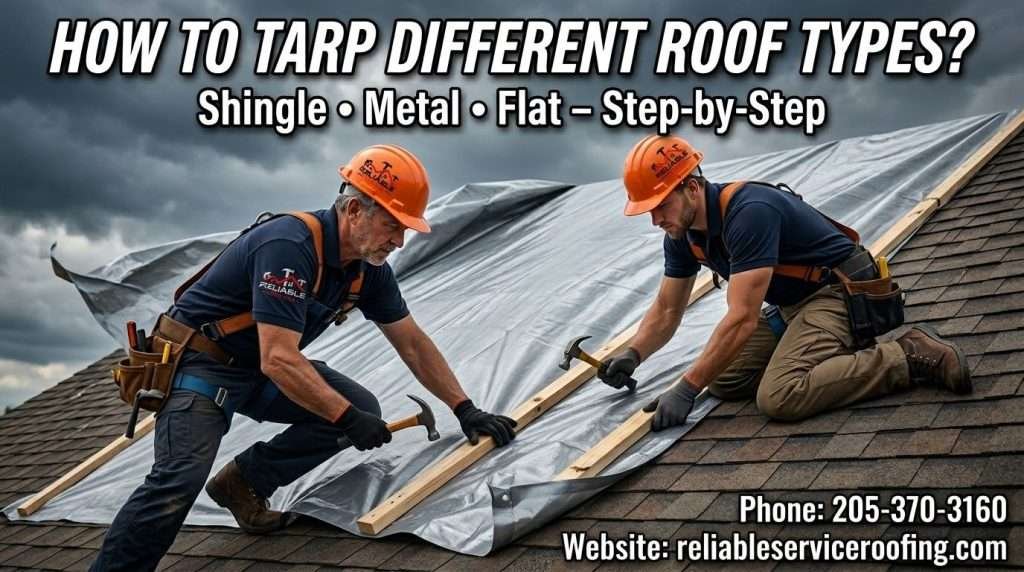
- Position the tarp — Start at the ridge or highest point. Tuck the top edge 12–18 inches under the row of shingles above the damage so water flows over the tarp.
- Overlap generously — Extend the tarp 4–6 feet beyond the damaged area on all sides.
- Secure with battens — Place 1×2 or 2×4 wood strips every 2 feet along the edges. Nail through the batten, tarp, and into the roof deck (never just through the tarp).
- Weight the bottom edge — Attach a second board at the lower edge to prevent wind lift.
- Seal seams — Use heavy-duty roofing tape or additional nails where the tarp meets intact shingles.
- Monitor daily — Remove any standing water after rain.
This method is the safest way to tarp a damaged shingle roof and is our go-to for most homes in Homewood and Mountain Brook.
Step-by-Step: How to Secure a Tarp on a Metal Roof
Metal roofs are slippery and easily scratched, so how to secure a tarp on a metal roof requires special care:
- Use non-penetrating anchors when possible — magnetic roof anchors or sandbags along the edges.
- If screws are needed, use only self-tapping metal screws with rubber washers and pre-drill pilot holes.
- Drape the tarp loosely at first, then tension it gently to follow the panel ribs.
- Add extra perimeter weighting — sandbags or water-filled bags every 3–4 feet because wind can whip tarps off smooth metal.
- Check seams daily — Metal expands and contracts with temperature swings common in Alabama.
We’ve used this exact roof tarp method successfully on dozens of metal-roof homes in Pelham and Chelsea after hailstorms.
Step-by-Step: Best Way to Tarp a Flat Roof
Flat or low-slope roofs need extra attention to drainage:
- Create positive slope — Elevate the center of the tarp slightly so water runs to the edges and drains.
- Use perimeter adhesive or tape designed for flat roofing membranes.
- Weight all four sides heavily — water-filled bags, sandbags, or concrete blocks (never bricks that can crack the membrane).
- Install temporary scuppers or hoses if water starts pooling.
- Inspect after every rain — flat roofs collect water fast, turning a small cover into a swimming pool if ignored.
The best way to tarp a flat roof prevents the most common failure: ponding water that eventually leaks through.
Common Client Mistakes We See in Birmingham
- Using the wrong size tarp (always go larger than you think).
- Nailing directly through the tarp without battens on shingle roofs.
- Skipping weights on metal or flat roofs.
- Leaving the tarp up for months instead of treating it as temporary roof covering.
- Forgetting to document damage before installing the tarp.
These mistakes turn a $400–$800 emergency roof tarp installation into costly interior repairs.
How Long Can a Roof Tarp Stay On?
A properly installed heavy-duty roof tarp can stay on 30–90 days in Birmingham’s climate. After that, UV rays and wind begin to weaken even the strongest material. Never treat it as permanent — schedule professional roof repair as soon as insurance approves.
How Much Does Emergency Roof Tarp Installation Cost in Alabama?
Professional emergency roof tarp installation in Birmingham typically costs $450–$1,800 depending on roof type, size, and urgency. Shingle roofs average $600–$1,200; metal and flat roofs often run $900–$1,800 because of added labor and anchoring materials. Same-day service after storms may add a small premium. Most insurance policies cover roof protection tarp work as part of storm damage claims, and we handle the paperwork directly with adjusters.
Roof Tarping Services in Birmingham & Nearby Areas Across Alabama
Our headquarters at 2700 Corporate Drive Suite 200, Birmingham, Alabama 35242 serves the entire central Alabama region. Homeowners in Hoover, Vestavia Hills, Homewood, Mountain Brook, Alabaster, Pelham, Chelsea, Trussville, Irondale, and beyond rely on our roof tarping services in Alabama for fast response.
Even if you’re searching for emergency roof tarp repair in Texas or storm roof tarping Florida, our local knowledge of Southern weather patterns helps us advise clients nationwide on the safest temporary roof covering methods.
Prevention Tips and Roof Maintenance Recommendations
- Inspect your roof twice a year — especially after major storms.
- Trim overhanging tree limbs that can crash through during high winds.
- Keep gutters and downspouts clear to prevent water backup.
- Consider upgrading to impact-resistant shingles or metal panels in hail-prone areas.
- After any storm, walk around your property and look for missing shingles or dents.
Early action with roof leak tarp solutions prevents small problems from becoming expensive disasters.
When to Call a Professional in Birmingham
Call a roof tarping contractor immediately if:
- You see daylight through your ceiling or attic.
- Water is actively leaking into living spaces.
- Multiple shingles or large sections of metal are missing.
- A tree or large branch has punched through the roof.
- You’re expecting more rain within the next 24 hours.
Can you tarp a roof yourself? Yes for very small, low-slope areas — but for steep roofs, metal roofs, or anything above one story, the safest way to tarp a damaged roof is to call the pros who do it every week.

Why Choose Reliable Service Roofing for Emergency Roof Tarp Installation in Birmingham
As your trusted local roof tarp company, we bring:
- Years of hands-on experience with every roof type in Alabama weather.
- Professional-grade heavy-duty tarps and roof-specific anchoring systems.
- Same-day and after-hours emergency roof repair tarp service.
- Full-service roof repair and replacement so your temporary fix becomes permanent.
- Complete insurance documentation and direct adjuster coordination.
- Honest, family-owned service with real local technicians who live and work in Birmingham.
We’re not just installing tarps — we’re protecting your home and your peace of mind.
Ready for fast protection? Contact Reliable Service Roofing today for expert roof tarping services in Alabama. Visit our roof repair in Birmingham AL service page to schedule your free inspection or same-day emergency roof tarp installation: roof repair in Birmingham AL . Don’t wait for the next storm — call the local experts Birmingham homeowners trust.
FAQs
The best way is to use a heavy-duty reinforced poly tarp secured with battens on shingle roofs, magnetic anchors on metal, and perimeter weights on flat roofs.
Each roof type needs its own method: tuck under shingles for asphalt roofs, use non-penetrating anchors for metal, and add heavy weighting plus drainage for flat roofs.
Yes for small, low, easily reachable damage, but steep roofs, metal roofs, or anything above one story should be handled by professionals for safety.
A professionally installed heavy-duty roof tarp can stay on safely for 30–90 days before it needs replacement or permanent repair.
A 10–16 mil reinforced polyethylene waterproof tarp with UV protection and reinforced grommets performs best in Alabama’s sun and storms.
Use wooden battens nailed through the tarp into the deck every 2 feet, plus a weighted bottom board to prevent wind lift.
Yes — a properly installed temporary roof covering stops leaks and prevents thousands in interior water damage until permanent repairs are made.